

Marketing for General Contractors: How Do You Build a Reliable Lead Machine in 2026?
Marketing for general contractors means building a system: a professional website, local SEO, steady reviews, follow-up, and one paid ads channel. Most GCs spend 5 to 10% of revenue on it.
Updated September 16, 2026 · 15 min read
Table of Contents
• Marketing for general contractors in 2026 means building a system: professional website, local SEO, steady reviews, a follow-up process, and at least one paid ads channel. • 97% of consumers read online reviews for local businesses before deciding; referrals alone rarely keep crews busy year-round. • Most contractors spend 5 to 10% of annual revenue on marketing; the ones with a consistent engine close better jobs at lower cost per lead.
What Should General Contractors Do First?
Contractor marketing changed after 2020. Homeowners shifted almost entirely to online research before picking up the phone. The GCs who treated marketing as a system pulled ahead. The ones relying on yard signs and old referral lists fell behind.
Here's what you need in place for 2026:
-
A professional website that loads fast, works on phones, and turns visitors into calls.
-
Local SEO so you show up in Google's map pack for your service area.
-
A steady stream of online reviews (recent ones, not just a pile from three years ago).
-
A simple follow-up system so leads don't slip through cracks.
-
At least one paid ads channel (Google Ads or Local Services Ads) for consistent lead flow.
General contractors across the US can work with L3ad Solutions on digital marketing services with no long-term contracts. For deeper reading, start with the local SEO fundamentals guide, the conversion-focused web design pillar, and the national contractor marketing blueprint.
Why Does Marketing Matter So Much For General Contractors In 2026?
Referrals alone rarely keep crews busy year-round. According to BrightLocal's 2025-2026 survey, 97% of consumers read online reviews for local businesses before making a decision. Online marketing for general contractors requires building trust and dominating local search, because that's where potential customers start.
Digital marketing lets a contractor business control lead flow, pick better-fit jobs, and stabilize revenue instead of riding the referral rollercoaster. A mid-sized GC doing 25 projects a year can often cut cost per lead by 30 to 40% by shifting from pure print to a mixed digital marketing strategy.
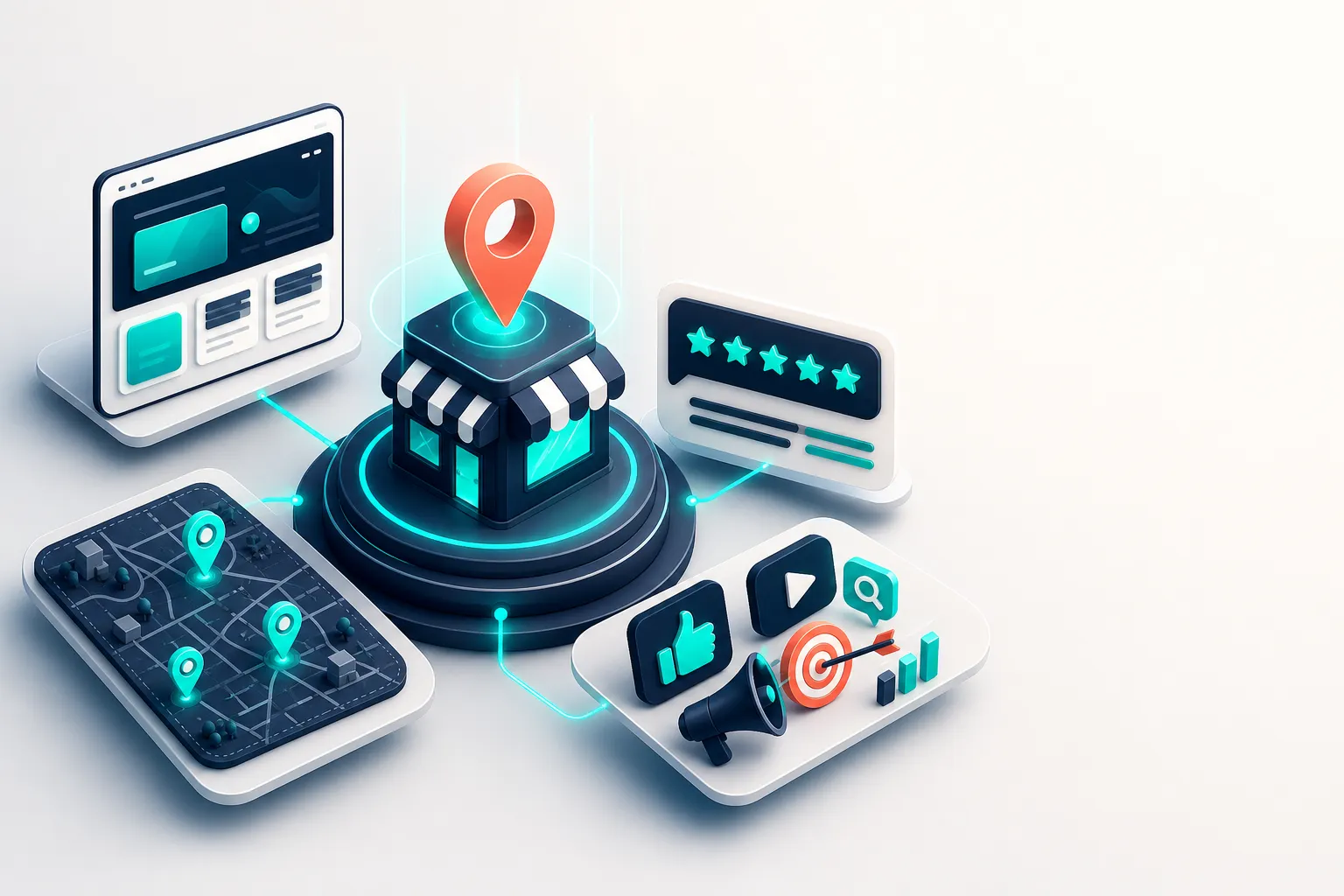
Think of it as a marketing engine: your professional website, local SEO, reviews, content marketing, paid ads, and follow-up all work together. No single piece does the job alone.
L3ad Solutions builds this engine for construction companies nationwide. The national contractor marketing blueprint covers the full system.
How Should General Contractors Define Their Ideal Projects And Clients?
A clear ideal client profile prevents wasted ad spend and nightmare jobs. If you chase every lead, you'll quote $8,000 deck repairs and $400,000 custom builds with the same marketing materials. Neither gets proper attention.
Define 4 to 5 traits for your target audience:
-
Project size range (e.g., $60k to $250k design-build remodels)
-
Service types (kitchen remodels, additions, light commercial)
-
Preferred zip codes and neighborhoods
-
Decision-maker demographics (dual-income homeowners, age 35 to 55)
-
Typical timelines (planning 3 to 6 months ahead vs. emergency work)
Create 2 to 3 written buyer personas. "Busy dual-income homeowners with 1990s kitchens in Denver suburbs" is more useful than "anyone who needs a contractor." This profile shapes your Google Ads targeting, Local Service Ads categories, social media advertising creative, and service area pages for local SEO.
L3ad Solutions asks these questions on the first strategy call. Generic contractor marketing strategies waste money. Specific ones bring prospective clients who actually match your crew's strengths.
What Does A Professional Contractor Website Need To Turn Clicks Into Phone Calls?
Your site has to work like a 24/7 salesperson, not a pretty brochure. A professional website boosts your credibility as a contractor. And 56% of people won't trust a business without a website at all.
Your website should turn visitors into leads, not just look good. Clear navigation helps potential clients find what they want easily. Here are the non-negotiables:
-
Mobile friendly website design (most homeowners search on phones)
-
Click-to-call buttons on every page
-
Simple quote form (name, phone, project type, zip code)
-
Service area clarity so visitors know you work in their town
-
Trust badges showing licenses, insurance, and association memberships
Your hero section needs a headline naming your city and main service, a subheadline mentioning years in business, and one strong call to action like "Request a Site Visit." High-quality project photos enhance credibility and attract clients. Add project galleries with before and after photos, job summaries, and location tags. Regular updates with new projects keep your site fresh and engaging.
Even modest fixes like improving page speed or simplifying contact forms can increase conversion rates by 20 to 40%. L3ad Solutions offers professional web design built specifically for contractors.
How Can General Contractors Use Local SEO To Own Their Service Area?
Local SEO means showing up in Google's map pack and organic search results whenever local homeowners search "general contractor near me" or "kitchen remodeler [city]." Local SEO increases leads by targeting service-related searches in your service area.
Contractors must build a strong local digital footprint to attract clients. Core local SEO tasks include:
-
Accurate NAP (name, address, phone) across all directories
-
City-specific service pages for each priority town
-
Schema markup on web pages (tells the search engine what your business is)
-
Using geo-targeted keywords in headings and copy
According to BrightLocal's consumer search behavior research, 45% of consumers pick Google as their default platform for local searches and another 15% start with Google Maps. Businesses in the top 3 map results get the bulk of phone calls.
Service area pages enhance local SEO effectiveness. Create unique pages for priority towns and neighborhoods instead of one vague "we serve the region" paragraph. Creating dedicated, optimized pages for services improves lead generation.
Start with a free local SEO audit to see where you stand. The local SEO fundamentals guide walks through the basics, and SEO for contractors is how you stop losing bids to the guy who shows up first.
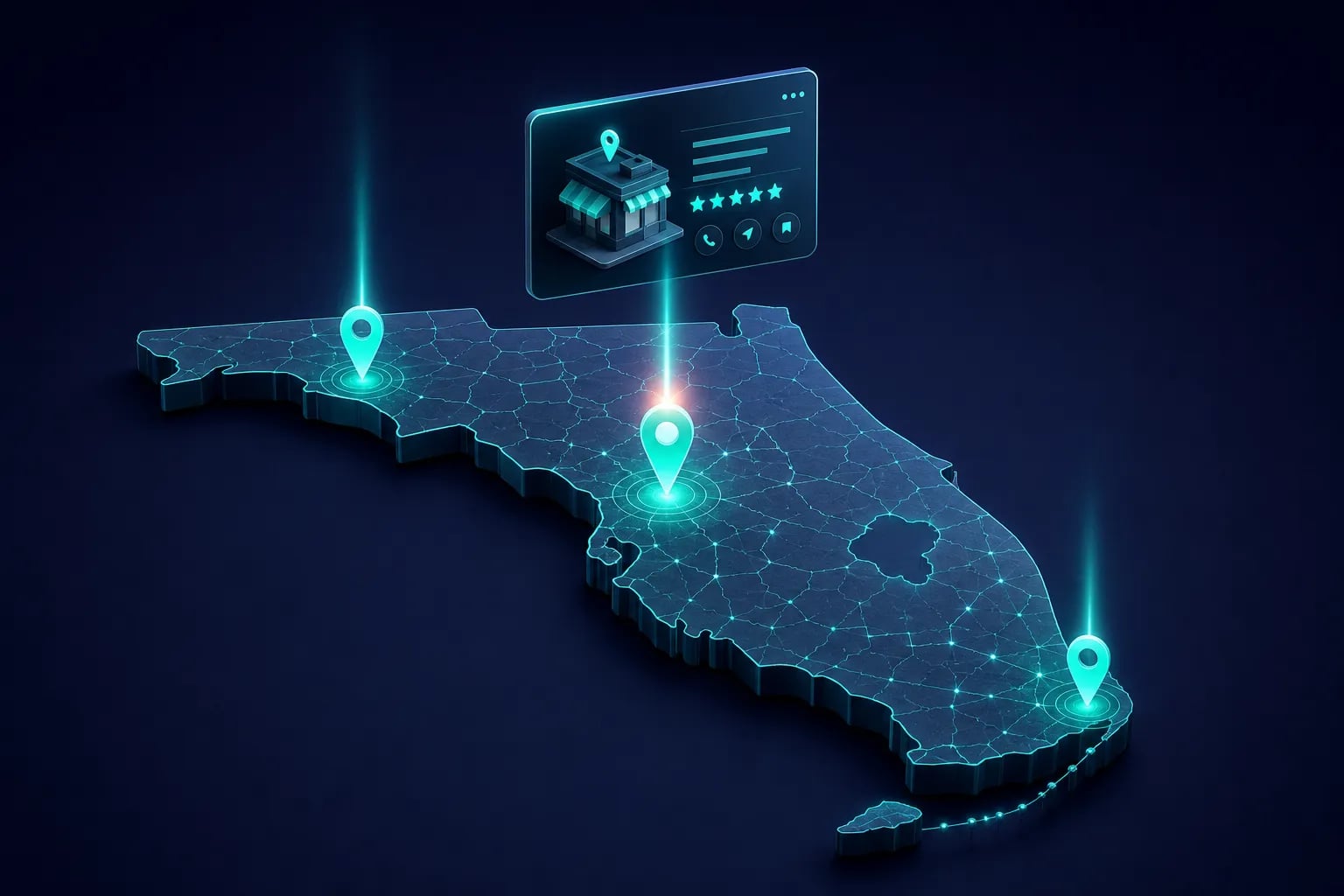
45% of consumers start local searches on Google and another 15% on Maps. The map pack is the battleground.
How Should General Contractors Optimize Their Google Business Profile?
Your Google Business Profile is often seen before your website. A well-maintained Google Business Profile improves search rankings. Optimizing your Google Business Profile boosts local search visibility and can increase lead generation.
Steps to get it right:
-
Claim and verify the listing if you haven't already (only 35% of small businesses have done this, per BrightLocal's 2025 SMB report).
-
Choose correct categories ("General contractor," "Kitchen remodeler," etc.).
-
Add your service areas with specific cities and zip codes.
-
Upload high-quality project photos regularly.
Google favors active listings with regular updates and new photos. Google Business Profile updates should include service info and photos. Write a concise description mentioning location, core services, years in business, and unique trust factors like warranties.
Don't ignore GBP Posts (weekly updates, promos), Q&A monitoring, and messaging. These are quick wins most contractors skip. Optimizing your Google Business Profile can increase lead generation from local clients who are ready to hire.
L3ad Solutions offers Google Business Profile management as part of broader contractor digital marketing.
How Do Online Reviews And Reputation Impact Contractor Lead Flow?
Steady, recent Google reviews are often the tie-breaker when a homeowner is choosing between 3 to 4 local GCs. Collecting reviews influences search rankings and customer trust. Consistent Google reviews improve local search rankings.
BrightLocal's 2026 data paints a clear picture: 47% of consumers won't even consider a business with fewer than 20 reviews, and 31% require at least a 4.5-star rating. Positive online reviews can boost credibility fast.
Getting 3 new reviews weekly is better than 50 at once. A simple review system:
-
Ask at project closeout (in person, while the homeowner is happy).
-
Send a follow-up text or email with a direct Google review link 1 to 2 days later.
-
Respond to every review, positive or negative, within a few days.
Responding to complaints quickly can improve negative reviews. A calm, professional public response shows prospective clients you take issues seriously. Some of your best marketing comes from handling a problem well in front of everyone.
The local reviews playbook goes deeper on timing and templates. Check your review health score to benchmark your current profile.
What Content Marketing Actually Works For General Contractors?
Useful, plain-English content pulls in potential clients before they're ready to get bids. Companies using inbound marketing see 3x more leads per dollar spent compared to outbound-only approaches. That's the case for content marketing strategies.
Content types that work for construction companies:
-
Project spotlights with photos, scope, timeline, and location
-
Cost breakdown articles by city and year ("2026 kitchen remodel costs in Austin")
-
FAQs answering the questions your estimators hear every week
-
Planning checklists for homeowners preparing for a remodel
-
Blog posts targeting "People Also Ask" questions and long-tail phrases like "how long does a bathroom remodel take in [city]"
Publish 1 to 2 strong posts or project pages per month instead of many thin posts. Then repurpose them into email marketing campaigns, social media posts, and short video clips.
Email marketing can yield an ROI of 3 times more leads per dollar. Regular newsletters strengthen authority and credibility in the market. Personalized emails can increase open rates and engagement. Email campaigns can reactivate old clients and generate referrals from satisfied clients.
Structured content also feeds AI search results, where contractors are now appearing. L3ad Solutions covers this through AI search optimization services.
How Can Social Media Marketing Help General Contractors Win Better Jobs?
Social media is not just for "likes." Social media helps prospects build confidence before contacting contractors. When someone gets your name from a friend, the first thing they do is check your social media presence.
Focus on 3 to 4 platforms:
-
Facebook for local community engagement and social media advertising
-
Instagram for project photos and Reels
-
YouTube Shorts for video marketing and job walkthroughs
-
LinkedIn for commercial work and networking with real estate agents
Post ideas that actually work:
-
Before and after photos (posting before-and-after photos on social media attracts potential clients)
-
60-second job walkthroughs and one-minute explainers (these can improve engagement on social media)
-
Crew introductions and behind-the-scenes clips
-
Screenshots of online reviews with brief backstories
-
Client testimonials, especially video testimonials that build trust by showcasing real customer experiences
52% of marketing professionals say video has the best ROI. Short videos can be repurposed across multiple social media platforms and social media sites. Video marketing can improve engagement on platforms like YouTube Shorts.
A simple schedule: 3 social media posts per week plus a few Stories or Reels, with consistent branding and location tags. Engaging with followers in comments boosts social media presence. Social media ads can target local homeowners effectively through Facebook and Instagram.
L3ad Solutions handles social media marketing for contractors who'd rather spend time on the job site.
Which Paid Ads Typically Produce The Best Contractor Leads?
Google Ads and Google Local Services Ads usually bring the highest-intent leads. Paid ads can generate leads quickly for contractors. Facebook and Instagram paid advertising work better for demand generation and retargeting.
Here's how the costs break down:
| Channel | Avg. Cost Per Lead | Lead Intent |
|---|---|---|
| Google Local Services Ads | $40 to $100 | High |
| Google Search Ads | ~$165 | High |
| Facebook/Instagram Lead Ads | ~$30 | Lower |
| Shared Lead Services (Angi, etc.) | $15 to $80 | Mixed (non-exclusive) |
A good search campaign structure: campaigns for "general contractor [city]," "home addition contractor," and "design build remodeler" with tight geo-targeting to your service area.
Use call extensions, location extensions, and call tracking numbers so you can see which relevant keywords produce real phone calls. Many GCs waste money with broad match keywords and no negative keyword lists. Ongoing optimization is not optional.
Google Analytics shows which marketing channels bring actual website traffic. Review search terms weekly and cut the ones that don't match your ideal projects.
L3ad Solutions manages paid advertising for contractors. The honest marketing budget pillar helps you estimate realistic monthly spend.
How Should General Contractors Follow Up With Leads So Fewer Slip Away?
Most contractors don't have a leads problem. They have a follow-up speed and consistency problem. Fast follow-up with leads can impact booking rates more than almost any other change. Responding within 5 minutes can double contact rates compared to waiting an hour.
A simple follow-up framework:
-
Instant text or email confirmation when a form is submitted
-
Same-day phone call (within minutes, not hours)
-
2 to 3 reminders over the next week for leads that don't respond
-
Nurture sequence for "not yet" leads (monthly check-ins, project ideas)
Use smart forms that capture budget ranges, project types, and timelines so you can prioritize better-fit inquiries. Well-timed email reminders can increase job bookings. This is part of a real sales process, not just hoping people call back.
Consider adding live chat or a basic chatbot to your site for after-hours questions, with a clear handoff to a human the next morning.
L3ad Solutions' AI automation services set up basic workflows (auto-responses, task reminders) without adding full-time office staff. That's practical contractor marketing services for small business owners.
How Can General Contractors Turn Finished Jobs Into A Steady Marketing Engine?
Each completed project can generate multiple marketing assets: a case study page, before and after photos, short videos, and review requests. 83% of people recommend businesses to friends or family, so a structured referral program can encourage high-quality leads.
Create a repeatable "job closeout checklist":
-
Photos from multiple angles (exterior, interior, details)
-
Quick homeowner interview (even a 30-second phone audio clip)
-
Notes on challenges and solutions
-
Final cost range for future reference
Turn this into a short written case study with location, scope, and timeline. Post it on your website and Google Business Profile. Ongoing storytelling about specific streets, neighborhoods, and architectural styles helps with both SEO and local authority.
Ask satisfied clients for referrals directly. Mention any formal referral program briefly in closeout conversations. Referred leads close at 2 to 3 times the rate of cold leads and tend to bring higher job values.
How Should General Contractors Balance Traditional Marketing With Digital Channels?
Print, yard signs, and direct mail still work for GCs, especially when layered with tracking and digital follow-up. Offline marketing isn't dead. It just needs to connect to your digital marketing efforts.
Practical traditional methods:
-
Branded jobsite signs visible from the street
-
Direct mail campaigns using Every Door Direct Mail to zip codes with older housing stock
-
Sponsorships of local teams or local events
-
Attending networking events in your local community, where real estate agents sell properties faster by connecting with reliable GCs
Add QR codes and short URLs on mailers and flyers so visits and leads are trackable. Engaging with local communities enhances brand recognition and generates referrals. Use a citation consistency check to make sure your name, address, and phone number match everywhere.
Print budgets should usually be a minority share compared to search and review-building for most small to mid-sized general contractors. Keep consistent branding (same logo, colors, unique value proposition) across trucks, shirts, print, website, and social to reinforce recognition.
How Much Should General Contractors Budget For Marketing Each Month?
Many established contractors invest 5 to 10% of annual revenue into their marketing budget. Growth-minded firms lean toward the higher end.
Example: a GC doing $1.5M in yearly revenue might plan $6,000 to $10,000 per month across SEO, paid ads, and content, then refine based on cost per lead. Home services cost per lead rose about 10.5% year over year in 2025.
Measuring revenue generation is essential for effective marketing evaluation. Track three numbers in a basic spreadsheet or CRM:
-
Cost per lead (total spend divided by number of leads)
-
Cost per booked job (cost per lead divided by close rate)
-
Average job value (helps you calculate real ROI)
Don't go all-in on a single channel. Spread across 2 to 4 marketing channels (SEO, Google Ads, reviews, and email or social nurture) for stability and business growth.
L3ad Solutions structures investment levels with no long-term contracts. See transparent monthly pricing for details.
How Can General Contractors Use AI And Automation Without Losing Their Voice?
AI tools help with drafts, captions, and reminders but shouldn't replace the contractor's real stories and language. Your marketing team (or your agency) should use AI as a tool, not a replacement.
Safe uses of AI for a contracting business:
-
Turning bullet notes from a job into draft blog posts
-
Generating email subject line ideas
-
Summarizing project notes for case studies
-
Auto-captioning videos for social media
Don't let AI write technical promises or legal claims without review. Human editing keeps local flavor and honesty. One strong, human-edited article or project page will usually outperform several generic AI-written posts in terms of phone calls and more leads.
The AI automation for local business guide covers how L3ad Solutions blends tools with human strategy.
What Does A 90-Day Contractor Marketing Plan Look Like In Practice?
The first 90 days should focus on fixing fundamentals, then layering in content and paid ads. Don't chase every possible tactic at once.
Month 1: Foundation
-
Fix website speed, mobile design, and contact forms
-
Claim and optimize Google Business Profile
-
Set up call tracking
Month 2: Visibility
-
Launch service area pages for priority towns (local SEO)
-
Start collecting reviews (target 3 per week)
-
Begin posting completed projects to social media
Month 3: Growth
-
Launch Google Ads or Local Services Ads
-
Publish first 2 content pieces (cost guides, FAQs)
-
Review search terms and adjust ad targeting weekly
Set 2 to 3 measurable goals: "30 qualified leads per month" or "20 new Google reviews in 90 days." Check progress against them.
L3ad Solutions structures new GC engagements around 90-day sprints with clear reporting. See real client results for examples of what this looks like.
How Can General Contractors Get Help Building And Managing Their Marketing Engine?
Many owners are already handling estimating, crews, and permits. An outside marketing team often makes more sense than DIY beyond basics for a successful contracting business.
A specialized contractor marketing agency should handle:
-
Professional website build and maintenance
-
Local SEO and search engine optimization
-
Paid ads management and reporting
-
Review systems and reputation monitoring
-
Ongoing digital marketing strategy
L3ad Solutions serves contractors anywhere in the US, month-to-month with no long-term contracts. We understand construction business timelines and seasonality. Headquartered in Brevard County, Florida, we work with GCs in all 50 states.
Get in touch for a free audit, or review the national contractor marketing blueprint to see sample strategies. Starting with one or two core channels is better than waiting for a "perfect" plan. More customers come from consistent effort, not perfection.
What Common Marketing Mistakes Do General Contractors Need To Avoid?
The biggest errors: relying only on referrals, treating the website as a digital business card, and turning paid ads on and off randomly.
Additional mistakes that drain contractor marketing budgets:
-
Ignoring online reviews or never responding to them
-
Sending website traffic to slow or confusing web pages
-
Buying leads from low-quality aggregators (shared leads look cheap at $15 to $80 each, but the actual cost per booked job balloons when 4 other GCs are calling the same homeowner)
-
Never tracking which jobs came from which marketing channel
-
Skipping email marketing entirely (email campaigns can reactivate old clients and generate repeat business)
Run a simple quarterly review checklist: website function, GBP status, review counts, top-performing ads, and cost per booked job compared to margins.
Even modest fixes (like improving page speed or simplifying forms) can lift conversion rates by 20 to 40% in many service businesses. Use the page speed analyzer tool and the marketing glossary if you run into jargon you don't recognize.
Tap a question to expand.
How long does it usually take for contractor marketing to start delivering consistent leads?
Is it better for a small general contractor to focus on SEO or paid ads first?
Do general contractors really need to post on social media if most work comes from referrals?
How often should a general contractor update their website content?
Can a general contractor manage marketing in-house, or is an agency always necessary?
Or start with a free AI visibility check
Does AI Recommend You?
See if ChatGPT, Gemini, Grok, and Claude name your business. Free, emailed in minutes.