


Marketing vs Advertising: Which Drives More Local Leads
Marketing versus advertising for a small business: which drives more local leads, what each costs, and how to split a small budget between them.
Updated April 7, 2026 · 14 min read
Table of Contents
• Marketing is your full plan: website, reviews, SEO, follow-up systems that attract and keep customers. • Advertising is the paid part: Google Ads, Facebook promotions that drive immediate attention. • Local Florida businesses need solid marketing foundations first so ads convert better and waste less budget. • Best results come from combining both with clear tracking and data-driven decisions.
Understanding the difference between marketing and advertising is crucial for local Florida business owners who want to drive more local leads and grow their businesses. This article is designed specifically for local service businesses across Florida’s Space Coast, from Titusville to Melbourne to Palm Bay. We explain the distinction between marketing and advertising, clarify which drives more local leads, and show why this knowledge matters for your success.
How do marketing and advertising actually differ for a small business owner?
Marketing and advertising are often used interchangeably, but they are not the same. Here’s what you need to know.
Marketing is the strategic process of researching, planning, creating, and managing all activities related to a company’s products or services. It encompasses a broad range of activities, including market research, branding, and customer engagement, all aimed at building long-term relationships and designed to attract customers and foster loyalty.
Advertising is a subset of marketing focused specifically on paid promotional messages. Advertising establishes a one-way communication channel that allows companies to broadcast non-personal messages directly to a broad audience, giving them full control over the content and promotion. Advertising uses paid channels to distribute messages to potential customers. Advertising focuses on paid promotion and strategic targeting within overall marketing plans, concentrating on immediate, measurable goals such as increasing visibility, driving conversions, and supporting specific campaign objectives.
The main difference between marketing and advertising is that marketing is a broader strategy that encompasses various activities, while advertising is specifically about delivering paid messages to promote products or services.
Think of it this way: marketing is your full playbook to attract customers and keep them, while advertising is one play you call when you need quick results.
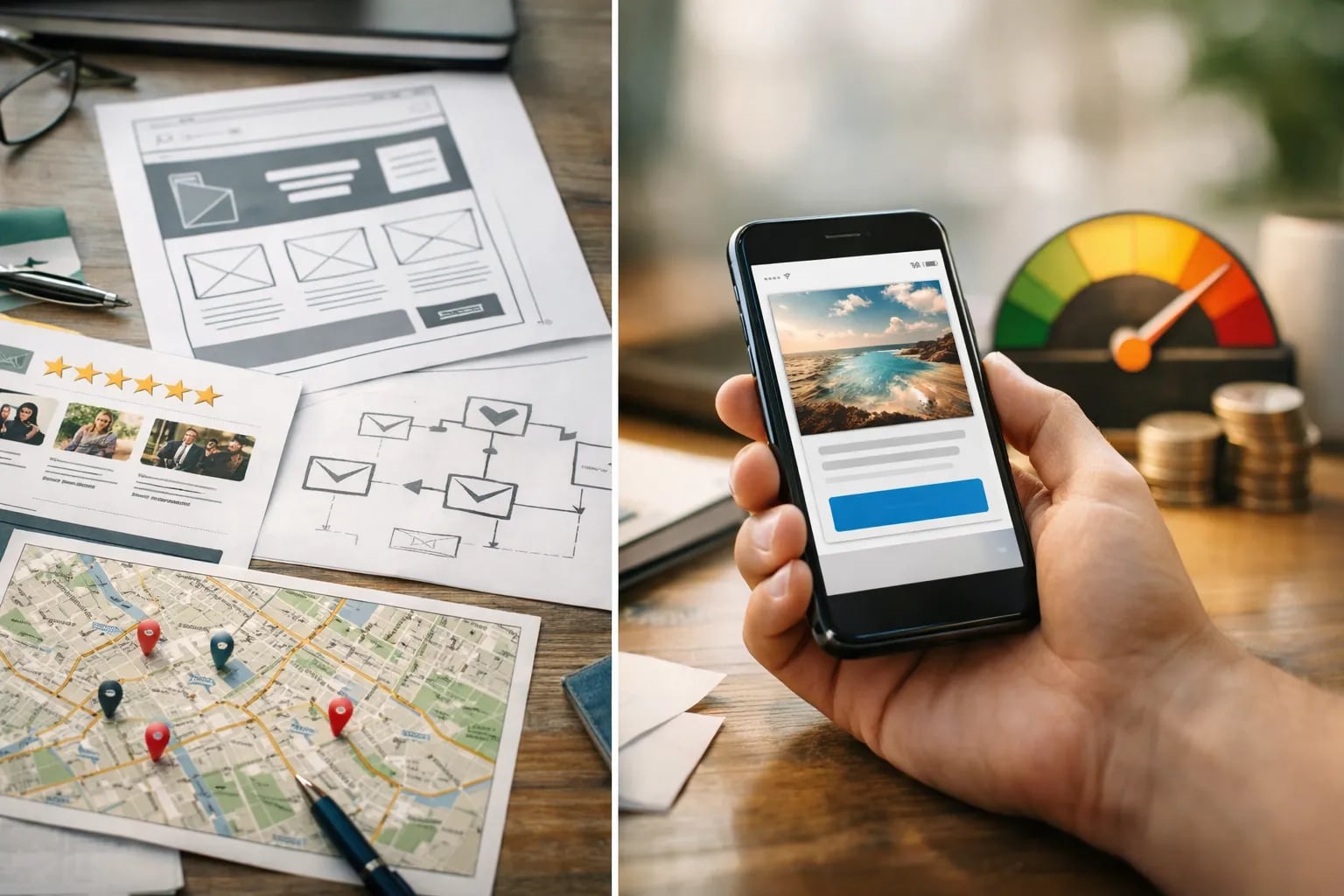
Marketing is the complete playbook. Advertising is one paid play within it.
A Cocoa plumber who invests in marketing builds a fast website, collects 50+ reviews on Google, sends follow-up emails after every job, and optimizes for searches like “drain cleaning Cocoa.” That same plumber might also run Google Ads, but the ads work better because everything else is in place. Compare that to the plumber who only runs ads, sending clicks to a slow site with three reviews. Most of those ad dollars get wasted.
Good marketing shapes what you say, who you say it to, and how you follow up. Advertising is paying to spread that message faster. For more on how this applies locally, check out our page on marketing and advertising in Florida.
What is marketing and why does it matter for local Florida businesses?
Marketing involves the full process of identifying customer needs, setting your pricing, building your online presence, and creating follow-up systems that turn one-time buyers into repeat customers. It’s everything that helps people find you, trust you, and come back.
The classic framework is the 4 Ps: Product (what you offer), Price (what you charge), Place (how people find you), and Promotion (how you spread the word).
For a Merritt Island med spa, that means choosing which treatments to offer, pricing Botox competitively against Orlando clinics, making sure the Google Business Profile is complete, and planning email reminders for rebooking.
Marketing builds brand awareness over time. It includes local SEO, content marketing, reviews, email, social media marketing, and referral programs. None of these require paying per click. Explore our marketing services to see how these pieces fit together.
Local SEO
Earn visibility in searches like “AC repair Titusville” without paying per click. Compounds over time.
Reviews & GBP
Build trust signals that improve conversion on both organic and paid traffic.
Follow-up Systems
Email and text sequences that turn one-time customers into repeat ones.
Website Experience
Fast, clear site that supports every channel and converts visitors.
What are the most effective types of digital marketing for local businesses?
Not every marketing strategy matters equally for a small local business. Focus on these.
Local SEO gets you found when someone searches “AC repair Titusville” or “roof leak Palm Bay.” This is about earning a spot in Google’s map pack without paying for each click. Strong local SEO services compound over time. Search engine optimization is a key digital marketing strategy that helps increase your visibility and attract more local leads.
Content Marketing means creating helpful pages that answer real questions, like “how to prevent mold in Florida humidity.” These pages build trust and help search engines understand your expertise.
Email and Text Follow-up keeps past customers coming back. A simple “time for your annual HVAC tune-up” text can boost repeat business 25-30%. Email marketing is consistently ranked as a high-ROI channel for businesses, especially when campaigns are segmented and personalized.
Social Media Engagement works best for visual businesses like restaurants or med spas. Instagram stories showing before-and-after results convert better than static posts.
Referral Programs turn happy customers into your sales team. Offering a small incentive for referrals builds customer loyalty without ad spend.
Your website design services should support all of these, making it easy for visitors to call or book.
How does local SEO fit into marketing, not just advertising?
Local SEO is part of marketing because you’re earning visibility instead of renting it. When you optimize your Google Business Profile, collect reviews, and build relevant content, you show up in search results without paying per click.
This is owned media, not paid media. Once you rank in the top three map results, those clicks keep coming without additional cost.
Our clients who rank in the top 3 map results see about 2.1x more calls than those buried mid-page. That aligns with industry data showing 75% of consumers never scroll past page one.[?florida-local-search-index]
Check out our Google Business Profile services and the Florida Local Search Index Q2 2026 data for local data on what’s actually working.
What is advertising and how is it different from marketing?
Advertising is when a company pays to place a specific message in front of a chosen target audience for a limited time. You control the timing and ad placement, but you pay each time you want attention.
Advertising uses paid channels to distribute messages to potential customers. This includes Google Ads, Facebook ads, Instagram promotions, local radio spots, billboards, and mailers. The moment you stop paying, the visibility stops.
Which advertising channels deliver the best results for Space Coast businesses?
A Melbourne HVAC company might run Google search ads every summer for “AC repair near me.” During June and July, they spend $2,000 per month and get 50 leads. But in August, when they pause the ad campaigns, those leads stop immediately. That’s the tradeoff with paid channels.
Here are the advertising types that drive real results for local service businesses.
| Ad Type | Best For | How It Works |
|---|---|---|
| Google Search Ads | High-intent leads | You bid on keywords like “plumber near me” and pay per click |
| Local Services Ads | Verified service calls | Pay per lead, not per click. Google screens your business |
| Facebook/Instagram Ads | Demographic targeting | Great for med spas, restaurants, and visual services |
| Retargeting | Warm leads | Shows ads to people who already visited your site |
| Mailers | Local awareness | 4-6% response rate in Florida suburbs |
| Radio | Brand awareness | Cost-effective for broad local reach |
A Titusville dentist might run Facebook ads for whitening specials. A Cape Canaveral fishing charter might use Google search ads targeting tourists. Mobile advertising matters here: 46% of all Google searches are “near me” queries, and 76% of those lead to a call within 24 hours.
How should a local business think about ad spend vs long-term investment?
Ads are renting attention. Marketing assets like SEO and your website are owning attention. Both have a place, but the order matters.
Running paid ads without a solid website, reviews, or follow-up system leads to wasted budget. You might pay $40 per click, but if your site converts at under 2%, you’re burning money.
A practical rule: spend 5-10% of monthly revenue on marketing and advertising combined. Here’s a sample breakdown for a $750k per year service business spending $4,000 per month.
| Category | Monthly Spend | Percentage |
|---|---|---|
| Ads (Google, Facebook) | $1,600 | 40% |
| SEO and content | $1,200 | 30% |
| Website and technical | $800 | 20% |
| Email tools and automation | $400 | 10% |
This reflects the data-driven approach we use at L3ad Solutions, where the founder’s Intel operations background shapes how we allocate budgets.

Sample monthly marketing allocation for a $750k Florida service business.
How do marketing and advertising work together in real life?
Marketing decides the offer, audience, and message. Advertising pays to spread that message faster. They work best in sequence, not isolation.
Picture a Titusville home services company over 6 months. Month one, they fix their website speed, claim their Google Business Profile, and start collecting reviews. Month three, they launch Google Ads driving traffic to a specific landing page with a clear call-to-action. By month six, they’re tracking which keywords bring the cheapest leads and doubling down.
The funnel looks like this: ad click or search result, website visit, phone call or form fill, follow-up text or email, review request. Each step requires marketing work. Advertising just fills the top of the funnel faster.
See how these pieces connect in our digital marketing services and monthly marketing packages.
What’s a simple 90-day marketing plan combining marketing and advertising?
Month 1: Fix your website basics. Make sure it loads in under 3 seconds on mobile. Set up call tracking. Complete your Google Business Profile. Ask recent customers for reviews.
Month 2: Launch a small ad test ($500-1,000) targeting your best service in your core area. Set up basic follow-up automations, like a text sequence after a quote request.
Month 3: Review the data. Which keywords bring cheaper leads? Shift budget toward what’s working. Add content pages around your top-performing search terms.
After 90 days, you should see clear trends in calls, form fills, and booked jobs. If you can’t see those trends, your tracking isn’t set up right.
Why is tracking and data so important, especially for ads?
If you can’t track it, you can’t tell what’s working. This sounds obvious, but most local businesses we audit have no idea which marketing efforts bring actual revenue.
Basic tracking includes call tracking numbers, form tracking, and a simple dashboard showing cost per lead. These pieces let you compare advertising performance across channels.
Here’s a real example: one client discovered “water heater repair Cocoa” brought leads at $18 each, while generic “plumber near me” cost $45. Without tracking, they’d never have known to shift their ad spend.
At L3ad Solutions, the founder’s Intel operations background means we obsess over data clarity. No vanity metrics, no fluff reporting. Check our marketing terms explained if terms like CPC or ROI feel unclear.

Clear tracking lets you see which channels actually deliver revenue.
How are automation and AI changing marketing and advertising for local businesses?
Automation handles repetitive tasks so owners can focus on running the business. This includes automatic review requests, text reminders, and follow-up sequences that would otherwise require manual effort.
Businesses that respond to new leads within 5 minutes convert about 2-3 times more often than slower responders. Automation makes that possible even when you’re on a job site.
AI search is also shifting how people find local services. Tools like AI search optimization help businesses show up in conversational queries, not just keyword-based searches.
What simple automations deliver the biggest impact for Space Coast businesses?
Start with these four basics:
- Automated review requests: Send a text after every completed job asking for feedback.
- Missed-call text-back: Automatically text callers you couldn’t answer with “Sorry we missed you, how can we help?”
- Quote follow-up sequences: A 3-email drip reminding people who requested quotes but didn’t book.
- Lead tagging in CRM: Track where each lead came from to measure advertising and marketing effectiveness.
A Titusville roofer using missed-call texts during summer storm season captures leads that would otherwise go to competitors. These systems reduce wasted leads from ads and improve return from existing marketing.
- Respond to leads within 5 minutes to increase conversion 2-3x
- Simple text automations capture storm-season leads that would otherwise be lost
- Track every lead source so you can shift budget from high-cost to low-cost channels
- Start with four basics before adding complex AI tools
How does data help decide between more SEO or more ads?
Simple decision process: if you need leads this week, raise ad spend. If you want lower cost per lead long term, invest in SEO and content.
Track three metrics monthly: cost per lead, close rate, and customer lifetime value.
If your cost per lead from ads stays above $50, that signals a need for better SEO strategy to bring organic traffic.
Review numbers monthly, not daily. Daily fluctuations cause panic-driven changes that break working campaigns. The goal is calm, data-based decisions about your marketing mix.
How should a Florida business choose the right mix of marketing and advertising?
There’s no universal formula, but clear patterns exist by business stage and cash flow.
New businesses (under 2 years) should spend 70% on marketing foundations: website, profiles, reviews, basic SEO. Ads can test offers with the remaining 30%.
Growing businesses often shift to 50/50. The foundations are solid, and ads help capture seasonal demand.
Established businesses might run 30% on ads, mostly during peak seasons, with 70% on maintaining and improving owned assets.
A new Cocoa Beach charter might focus entirely on GBP optimization and reviews. A growing Palm Bay med spa might layer Facebook ads on top of strong organic presence. An established Titusville HVAC company might only run Google Ads during summer while SEO drives steady year-round leads.
Ready to see where you stand? Get a free consultation to review your current mix.
New Businesses
70% on website, GBP, reviews, and basic SEO. Test ads with the rest.
Growing Businesses
Move toward 50/50 once foundations are solid and seasonality appears.
Established Businesses
30% ads during peak seasons only. 70% on owned assets year-round.
What mistakes do owners make by confusing marketing with advertising?
Common mistakes include buying ads before fixing the website, turning off everything in slow months, chasing every “deal” from sales reps, and expecting ads to fix a bad offer.
We’ve helped Space Coast clients recover from all these mistakes. They’re common and fixable once you separate marketing strategy from tactical advertising work.
How can L3ad Solutions help with both marketing and advertising?
L3ad Solutions plans overall marketing strategy and manages ad campaigns, but we won’t recommend paid campaigns before the basics are in place. That would waste your money.
We offer local SEO services, website design services, Google Business Profile services, paid ad management, and automation setup.
Our reporting focuses on calls, form fills, and booked appointments, not impressions or “engagement.” Month-to-month options mean you’re never locked into long contracts. Check our marketing services for the full picture.
Tap a question to expand.
Is marketing or advertising more important if I don’t have a big budget?
How long does it take to see results from marketing compared to advertising?
Can I just boost Facebook posts instead of doing real marketing?
Do I need a fancy website before I start any advertising?
How much should a local business in Florida spend on marketing and advertising?
What should I do first if my phone isn’t ringing enough?
References
Or start with a free AI visibility check
Does AI Recommend You?
See if ChatGPT, Gemini, Grok, and Claude name your business. Free, emailed in minutes.