

AI Search for Ecommerce: Product Schema Wins
Learn how product schema helps your store appear in ChatGPT, Perplexity, and other AI shopping answers. Practical steps for US ecommerce brands.
Updated July 24, 2026 · 7 min read
Table of Contents
TL;DR: AI shopping tools pull product details directly from structured data on your site. Product schema with price, availability, ratings, and attributes makes your items easy for engines to recommend accurately. Brands that add complete JSON-LD markup see more citations in answers about specific items and comparisons. Skip it and you risk getting overlooked even when your products match the query.
Small and mid-size US business owners running ecommerce stores face a new reality. Customers now ask AI tools like ChatGPT or Perplexity for product recommendations instead of typing keywords into Google. Those tools need clear signals to pick one item over another.
How AI engines handle product queries today
ChatGPT Search and Perplexity both pull live data when users ask for buying advice. Perplexity shows inline citations on most product recommendations. ChatGPT often lists sources in a sidebar or footer. Both engines favor pages that spell out exact details instead of forcing the model to guess from text alone. Tests from 2025 and early 2026 show that pages with full product markup get recommended more often in shopping conversations. The engines treat schema as reliable facts rather than marketing copy.

AI engines rely on clear structured data to deliver accurate product recommendations and citations.
Product schema basics every store needs
Start with the core Product schema from Schema.org. Include name, description, image, brand, and offers. The offers section carries price, currency, and availability. Add aggregateRating and review objects when you have them. JSON-LD format works best because it sits cleanly in the page head and stays separate from visible text. Most major platforms now support easy schema plugins or custom code blocks.
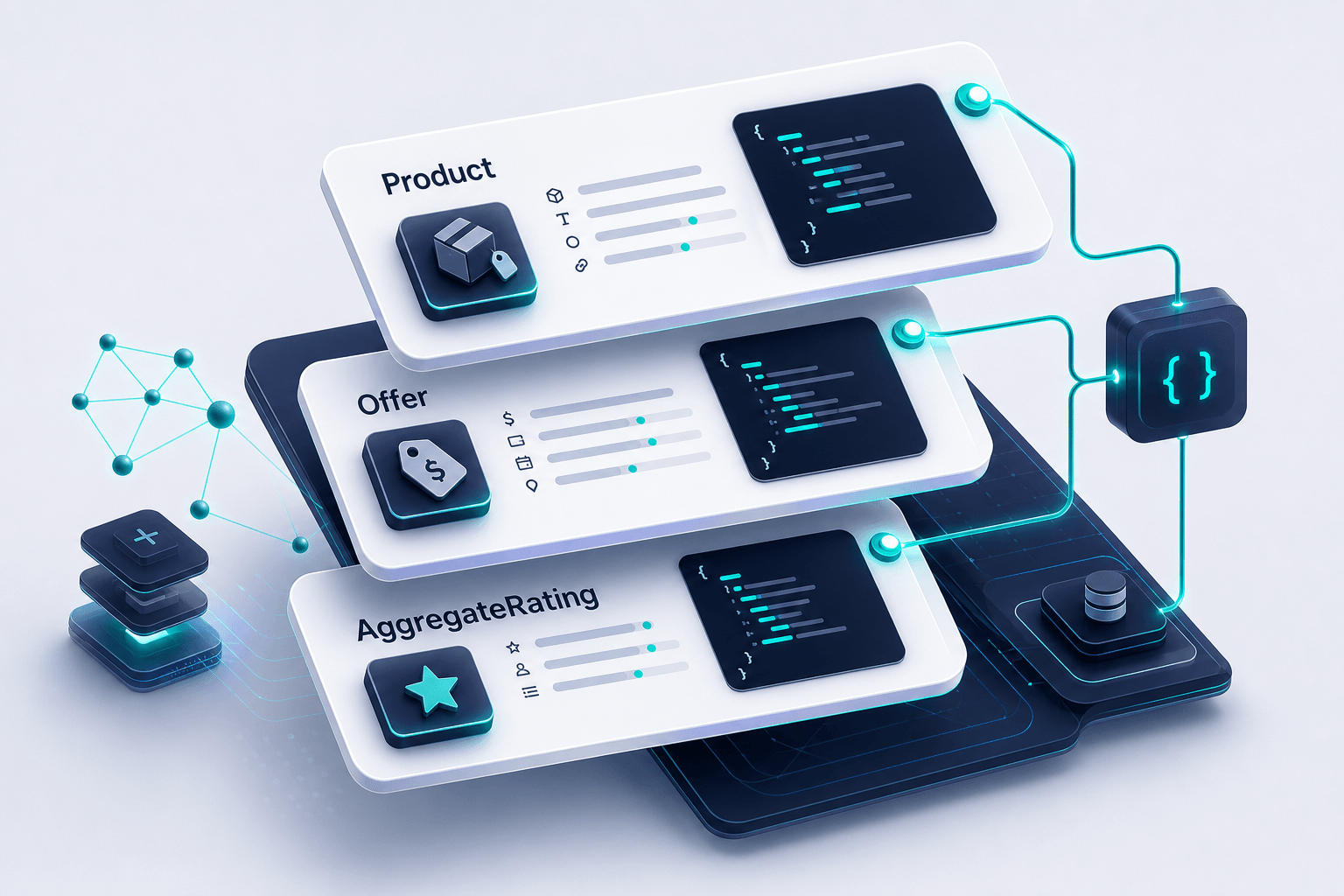
Complete Product schema with offers and ratings helps AI tools cite your products accurately.
Attributes that drive AI shopping recommendations
AI tools use specific fields to filter and compare items. Fill in material, size, color, and shipping details whenever they apply. Stock status and price updates matter most for real-time answers. One test showed that complete attribute sets raised citation rates for product pages by giving engines confident data points. Incomplete schema forces the model to skip your listing or pull from less accurate sources.

Detailed product attributes in schema enable precise AI-driven recommendations and comparisons.
Real citation patterns in 2026 AI answers
Perplexity places heavy weight on primary product data and often cites the source inline. ChatGPT favors authoritative brand pages with clear pricing and ratings. Claude pulls from similar structured feeds when available. Engines cite pages that match user constraints like budget, material, or shipping speed. Stores with rich product markup appear in comparison lists and shortlists far more than those relying on plain HTML alone.
Merchant programs versus pure schema
ChatGPT now runs a Merchant Program that lets eligible stores feed live product data for direct recommendations and checkout. Perplexity offers a similar Buy with Pro feature with shoppable cards. These programs can bypass some traditional visibility steps. Even so, strong on-site product schema remains the foundation. It helps both direct feeds and organic AI citations when users ask open questions.
Common schema mistakes that hurt visibility
Many stores leave price or availability blank inside the schema. Others use only basic fields and skip reviews or detailed attributes. Duplicate or conflicting markup across pages confuses engines. Always validate with Google's Rich Results Test or similar tools before publishing. Keep the data in sync with your actual catalog so AI answers stay accurate.
How to measure results in AI search
Track mentions by running the same product queries across ChatGPT, Perplexity, Claude, and Gemini every week. Note whether your store appears with correct details and a clickable link. Tools that monitor AI citations across multiple engines give a clearer picture than traditional rank trackers alone. Consistent schema improvements show up as higher inclusion rates within 30 to 60 days for most stores.
Add Product and Offer schema to your top 20 selling pages first. Update pricing and stock daily so AI answers stay current.
Key Takeaways
- Implement full Product schema with price, availability, and ratings on every product page.
- Use JSON-LD and validate it regularly to avoid errors that block citations.
- Fill in detailed attributes like material and size so AI can match specific buyer requests.
- Combine on-site schema with merchant program applications where eligible.
- Monitor AI answers weekly and refresh data when products change.
FAQ
Does product schema replace traditional SEO for ecommerce?
No. Schema works alongside standard SEO. It gives AI engines explicit facts they can trust when building answers. Keep your pages fast, mobile-friendly, and filled with clear text.
How long does it take for schema changes to show in AI results?
Most stores see initial improvements within a few weeks. Engines re-crawl and re-index on their own schedules. Consistent updates and fresh content speed the process.
What if my store uses Shopify or a similar platform?
Most platforms offer built-in schema options or simple apps. Enable Product schema and review fields first. Custom JSON-LD can fill any gaps the app leaves.
Can small stores compete with big brands in AI shopping answers?
Yes. AI engines reward accurate, complete data more than brand size alone. A well-marked product page from a smaller store often beats a sparse page from a larger one.
Related on L3ad Solutions
Or start with a free AI visibility check
Does AI Recommend You?
See if ChatGPT, Gemini, Grok, and Claude name your business. Free, emailed in minutes.