



Structured Data for AI Discoverability
Learn how structured data and schema markup help small US businesses get cited by ChatGPT, Claude, Perplexity, and Gemini beyond traditional rich snippets.
Updated June 20, 2026 · 10 min read
Table of Contents
TL;DR: Structured data gives AI engines clear signals about your content. FAQPage schema tops citation lists for question queries. Article schema with dates and Organization schema build trust signals. Pages using multiple complementary schemas see higher citation rates across ChatGPT, Perplexity, and Gemini. Implementation uses JSON-LD on existing pages without changing your site design.
Small business owners now face a new reality. Traditional search rankings no longer guarantee visibility when customers ask AI tools for answers. ChatGPT, Claude, Perplexity, and Gemini pull from web content and decide what to cite based on clarity and structure.
Why Schema Matters More Than Rich Snippets
Rich snippets improve click rates in classic search. AI engines treat schema differently. They read it to parse facts, verify claims, and extract direct answers. Tests from late 2025 showed ChatGPT, Claude, Perplexity, and Gemini all process schema markup when they fetch pages directly.
Pages with clean schema get cited more often because models can trust the labeled data. One analysis found sites with proper markup earned 3.2 times more AI citations than sites without it. The gain comes from accurate entity resolution and fact extraction rather than display tricks.
The shift matters for US businesses competing nationally. A local service page with Organization and FAQ schema can surface in a national query when the AI needs a clear source. Without those labels the model may skip your content for one with explicit structure.

Proper schema markup helps AI models parse and trust your content for direct citations.
Top Schema Types AI Engines Favor
FAQPage schema leads in citation frequency for question-driven queries. It marks question-answer pairs so models can pull them cleanly. Reports from 2025 and 2026 show FAQPage achieving 67 percent citation rates on relevant prompts.
Article schema comes next. Include headline, datePublished, dateModified, and author. Freshness signals matter. AI platforms prefer content updated more recently than average organic results.
Organization and Person schemas establish who you are. They connect your brand and experts to the content. Combine them with BreadcrumbList on service pages for better context. Pages using three or four complementary schemas together receive roughly double the citations of single-schema pages.
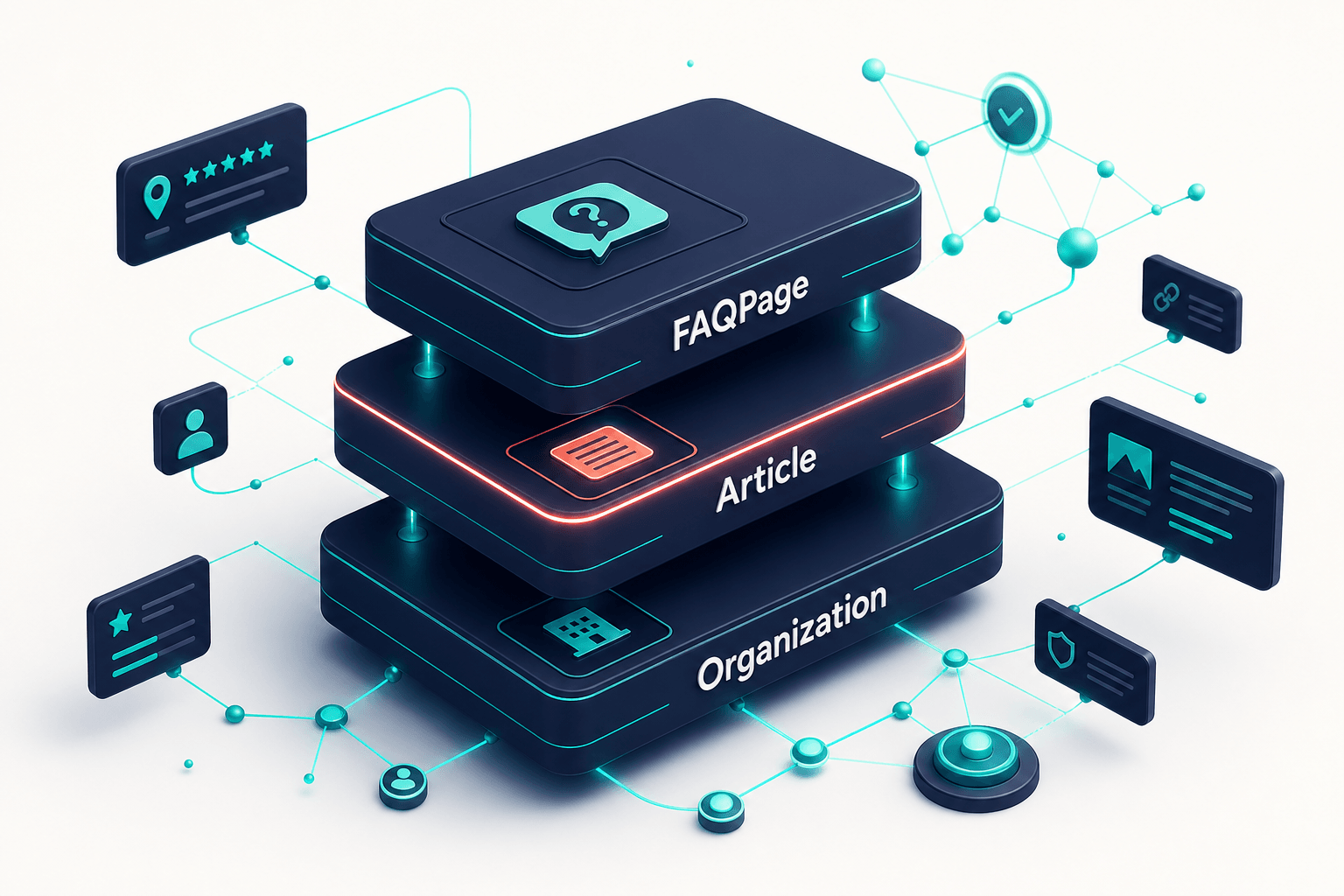
Combining multiple schema types creates stronger signals for AI retrieval systems.
How to Add Schema Without a Developer
Start with your homepage and main service pages. Use Google's Structured Data Markup Helper to generate JSON-LD code. Paste the block into the head section or a dedicated schema plugin.
Test every addition with Google's Rich Results Test tool. Fix any errors before publishing. Keep the markup accurate. Mismatched data reduces trust and can lower citation chances.
Update Article schema whenever you revise a post. Change the dateModified field. This simple step signals ongoing relevance to retrieval systems used by ChatGPT and Perplexity.
Real Examples From US Businesses
A national plumbing company added FAQPage and HowTo schema to its repair guides. Within months it appeared in Perplexity answers for emergency service questions. The schema let the model extract step lists and pricing details directly.
A mid-size accounting firm placed Organization and Person schema on its blog. Combined with Article markup it earned citations in Gemini responses about tax changes. The explicit author and update dates helped the AI verify expertise.
An e-commerce brand selling tools used Product schema with AggregateRating. It saw higher citation rates in ChatGPT shopping queries because the model could confirm price, availability, and reviews without guessing.

Real-world schema implementations create measurable citation gains across AI platforms.
Limits and Realistic Expectations
Schema improves parsing but does not guarantee citations. Relevance, topical depth, and clear writing still drive selection. One 2026 review found no direct correlation in every test, which shows schema works best alongside strong content.
Avoid over-markup. Only label what actually exists on the page. Inflated claims get ignored or penalized in trust scoring.
Monitor results through AI search tools. Ask the same questions you want to rank for and note which sources appear. Adjust schema on underperforming pages first.
Next Steps for Your Site
Audit current pages for missing schema. Prioritize FAQPage on any question-heavy content and Article on blogs. Add Organization schema to the homepage this week.
Track changes over 60 days. Compare AI citation frequency before and after. Most small businesses see measurable lifts when they combine two or three key types.
Work with a partner that understands both traditional SEO and AI retrieval patterns. Proper implementation turns existing content into machine-readable assets without new pages or redesigns.
Schema helps models extract facts accurately. It does not replace the need for original, authoritative content that answers real customer questions.
Key Takeaways
- Add FAQPage schema to every guide or FAQ section first.
- Include dateModified in Article schema on all blog posts.
- Place Organization schema on the homepage with accurate sameAs links.
- Combine FAQPage with Article and BreadcrumbList for stronger signals.
- Test markup with Google's tool and fix errors before launch.
FAQ
Does schema markup still matter if I already rank in Google?
Yes. AI engines read schema to verify and extract content even when traditional rankings stay the same. It improves the chance of direct citation in ChatGPT and Perplexity answers.
How long until I see results from adding schema?
Most sites notice changes in AI responses within four to eight weeks. The timeline depends on how often the engines recrawl your pages and how competitive the query topic is.
Can I use the same schema types for every page?
Match the type to the page. Use Article on blogs, Product on shop pages, and HowTo on tutorials. Mixing unrelated types creates noise that models ignore.
Is JSON-LD the only format I should use?
JSON-LD remains the recommended format because it separates markup from visible content. Microdata and RDFa still work but require more maintenance.
Related on L3ad Solutions
Or start with a free AI visibility check
Does AI Recommend You?
See if ChatGPT, Gemini, Grok, and Claude name your business. Free, emailed in minutes.