



AI Search Analytics: KPIs That Replace Rankings
Classic SEO metrics miss the mark in AI search. Learn the real KPIs like citation rate, share of voice, and AI referral quality that show how your business appears in ChatGPT, Perplexity, Gemini, and Google AI Overviews.
Updated July 10, 2026 · 12 min read
Table of Contents
TL;DR: AI search changes what success looks like. Track citation rate across buyer queries on major platforms instead of position. Measure share of voice against competitors to see real visibility. Monitor AI-referred traffic quality and pipeline impact in your analytics. Use these numbers to guide content that gets cited directly in answers from ChatGPT and similar tools.
Small business owners watch their Google rankings and wonder why traffic feels flat even when positions hold. The reason is simple. People now ask full questions to AI tools and get synthesized answers instead of lists of links. Your site either appears as a cited source or it does not show up at all.
Classic SEO dashboards were built for clicks. AI search rewards extractable facts, clear structure, and consistent signals across platforms. Measuring the right things shows whether your content earns mentions in real buyer conversations.
L3ad Solutions helps US businesses build visibility in these new systems. The first step is knowing exactly what numbers matter and how to read them.
Citation Rate Across Key Platforms
Citation rate measures how often your brand or specific pages appear in AI-generated answers for priority queries. Run the same set of buyer-intent questions on ChatGPT, Perplexity, Gemini, Claude, and Google AI Overviews every week or two. Record whether your content surfaces as a source.
Perplexity tends to show more citations per answer and places them prominently with higher click-through rates on those links. ChatGPT often includes fewer direct citations and higher zero-click rates overall. Google AI Overviews pulls heavily from brand sites in many categories.
Track this percentage over time. A rising rate means your content is becoming the kind of clear, sourced material these systems pull from. Start with 10 to 20 core questions your ideal customers ask and expand from there.
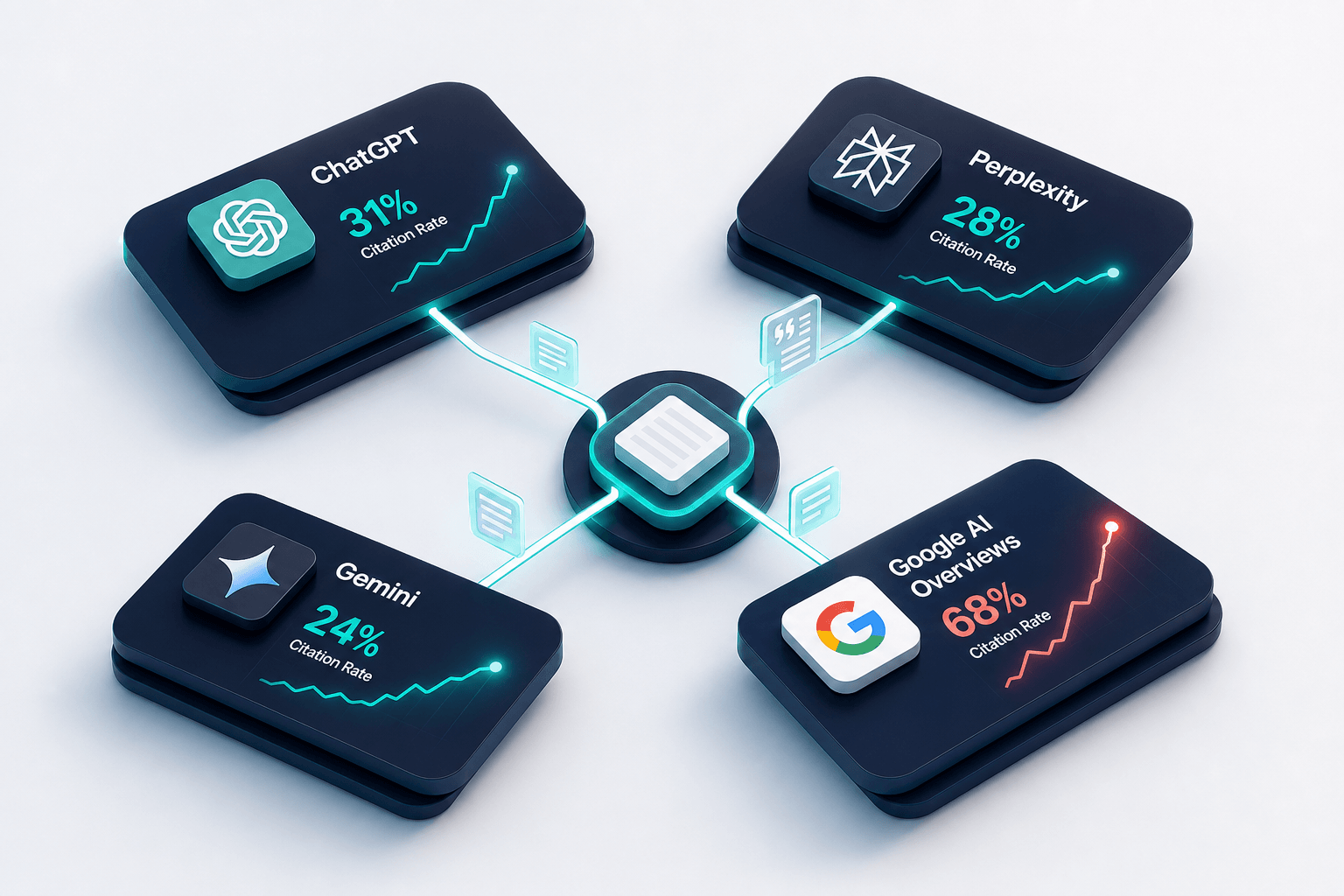
Tracking citation performance across AI platforms reveals where your content earns direct mentions in answers.
Share of Voice Versus Competitors
Share of voice compares how frequently your brand appears relative to direct competitors in the same AI responses. Test identical queries and count mentions or citations for everyone in your category.
This metric reveals gaps quickly. If three competitors consistently outpace you on questions about pricing or features, you know where to add clearer tables or sourced comparisons.
Run monthly reports that include your top three rivals. Look at trends rather than single snapshots. Closing the gap here often drives more qualified inquiries than chasing a higher traditional rank.

Share of voice metrics quickly highlight competitive gaps in AI-generated answers.
AI Visibility Score for Your Query Bank
An overall visibility score combines citation rate and share of voice into one weighted number across your tracked queries. Many tracking platforms calculate this automatically as a 0 to 100 value with trend lines.
The score focuses on the questions that matter most to revenue. Weight buyer-intent queries higher than broad informational ones. A steady climb in this number signals improving presence inside the answers people actually see.
Review the score alongside raw citation counts. A high score built on a few lucky mentions is less useful than consistent coverage across dozens of relevant prompts.
AI-Referred Traffic and Pipeline Quality
Check your analytics for direct referrals from chat.openai.com, perplexity.ai, gemini.google.com, and similar domains. These visits often convert differently than traditional organic traffic because the user already received context from the AI answer.
Look beyond session count. Measure time on site, pages viewed, and downstream actions like form fills or calls. High-quality AI referrals tend to show stronger intent even when raw volume stays modest.
Tag these sessions separately in your CRM or analytics setup. Over several months you can tie specific AI citations to closed business and calculate real contribution to pipeline.

AI-referred traffic often demonstrates higher intent and stronger downstream conversion quality.
Sentiment and Positioning in Responses
Read the actual language AI tools use when they mention you. Note whether descriptions highlight strengths, pricing, or specific use cases that match your positioning.
Negative or outdated framing hurts more than low visibility in some cases. If responses consistently call out an old feature set, update your site content with fresh details and clear comparisons.
Log examples monthly. Patterns in how tools describe you versus competitors reveal messaging opportunities that raw numbers miss.
Platform-Specific Performance Differences
Each major AI engine behaves differently. Perplexity emphasizes citations with clear sourcing and often higher density. ChatGPT balances speed with selective references. Google AI Overviews favors established brand content in many verticals.
Test the same queries on every platform you care about and compare results side by side. Adjust content emphasis based on where your strongest opportunities lie. A page that earns strong citations on Perplexity may need different structure to perform on Gemini.
Maintain separate scorecards for each engine rather than one blended view. This prevents averaging away platform-specific wins or gaps.
Content Extractability Signals
AI systems pull modular chunks rather than full pages. Measure how often your headings function as direct answers and how frequently tables or lists get referenced.
Track use of FAQ schema, Article schema, and HowTo schema across key pages. Clear, self-contained sections with sourced statistics improve the odds of accurate citation.
Audit a sample of recent AI answers that cite you. Note which page elements were used. Double down on formats that succeed and revise those that get ignored or misquoted.
High zero-click rates on many AI answers mean traditional traffic metrics understate your presence. Citation tracking captures the full picture.
- Run the same buyer queries weekly across ChatGPT, Perplexity, Gemini, and Google AI Overviews to build citation rate data.
- Compare your brand mentions directly against the top three competitors in the same responses for share of voice.
- Separate AI referral sessions in analytics and track their conversion path to revenue.
- Review actual response language monthly to catch outdated or incomplete positioning.
- Maintain platform-specific scorecards instead of one average view.
Tap a question to expand.
How often should I check AI search visibility?
Do I need special tools to track these KPIs?
What if my citations stay low after changes?
How does this connect to traditional SEO?
Related on L3ad Solutions
Or start with a free AI visibility check
Does AI Recommend You?
See if ChatGPT, Gemini, Grok, and Claude name your business. Free, emailed in minutes.