National Plumbing Marketing Blueprint: How Do You Consistently Book Jobs in 2026?
A practical plan for plumbing businesses focused on local visibility, lead capture, reviews, and measurable results.
Plumbing MarketingLocal SEOGoogle Business Profile
TL;DR
• Focus on local visibility, fast lead capture, reviews, and clear tracking
• Fix website basics, local SEO, Google Business Profile, and high-intent ads first
• Most businesses see growth in 12 to 18 months with consistent execution
Most plumbing businesses can double booked jobs in 12 to 18 months by fixing the basics first: the website, local SEO, Google Business Profile, and online reviews. The best marketing plan is not flashy. It’s focused, measured, and built around how local customers actually hire.
Homeowners start most searches on Google, Google Maps, and search engines. Since 97% of users search online to discover local businesses, a strong online presence is essential.
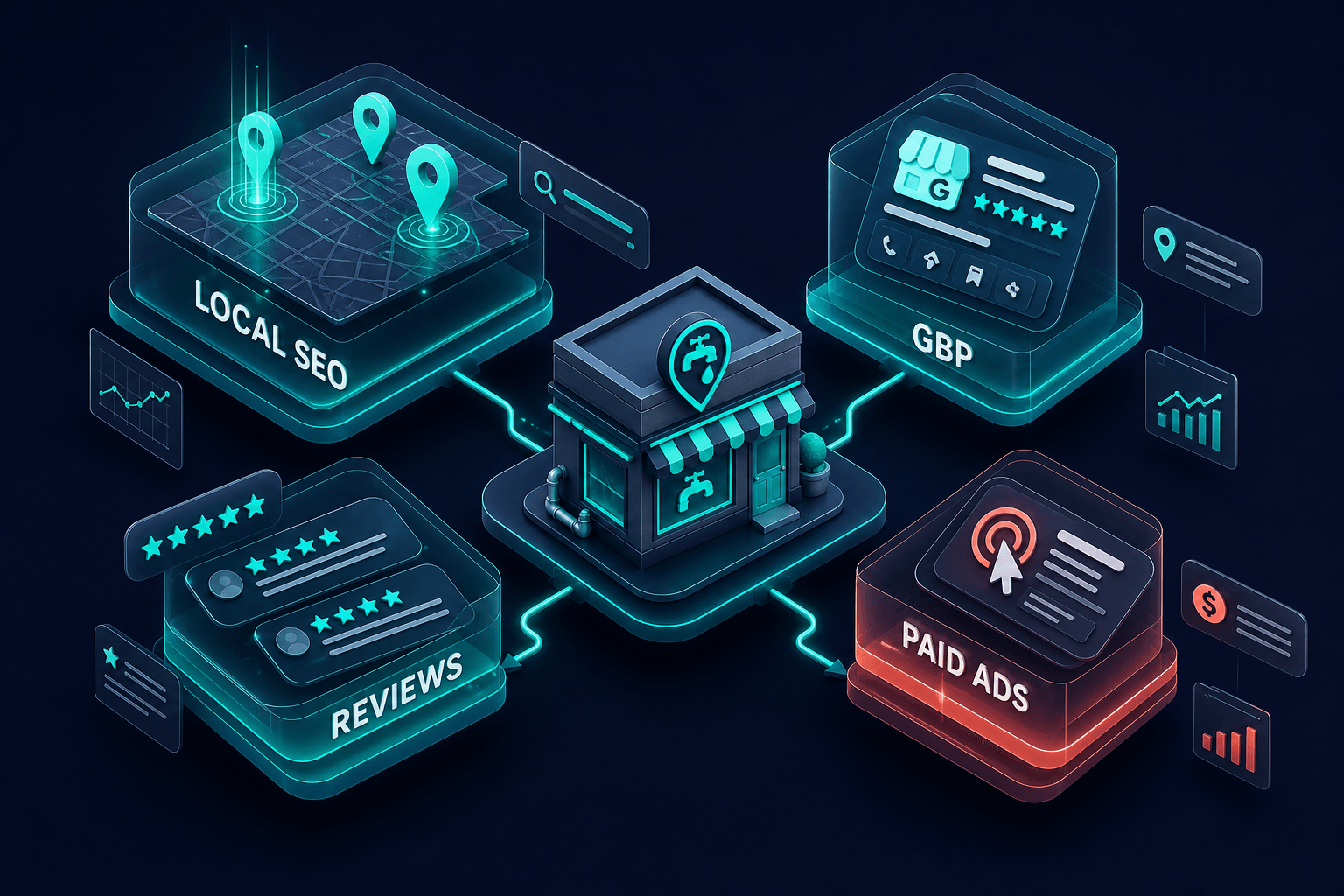
Build a 90-day plan around three pillars: website plus Google profile, reviews plus reputation management, and high-intent paid ads like Google Local Services Ads.
Track every call, form, and booked job back to specific marketing campaigns. That’s what separates profitable businesses from owners who are “just boosting posts.”
A plumbing marketing blueprint is a simple written plan that connects revenue goals, crew capacity, and marketing channels over 12 months. It should tell a business owner what to do, what to spend, what to track, and when to adjust.
The 2026 context is clear: demand is steady, material costs are higher than they were in 2021, and competition on Google is tighter because of local services ads and marketing agencies. A successful blueprint must focus on hyper-local visibility, rapid lead capture, and relationship building.
Most businesses are chasing four goals: more emergency service calls from high intent customers, higher average ticket work such as water heaters and sewer lines, more service agreements and repeat customers, and more stable commercial work.
Your main marketing channels should include a website, local SEO, Google Business Profile work, online reviews, paid search, social media marketing, email, customer referral program offers, and offline branding. L3ad Solutions works with businesses across the country through the national plumbing marketing blueprint, so the plan is built for US service markets, not one city.
Because needs are often emergencies, your plan must position your brand as the immediate, trusted solution in your specific service area. That means your marketing strategy should favor high intent searches like “plumber near me,” “water heater repair,” and “24 hour plumber,” not vague awareness campaigns.
A clear 12-month blueprint connects revenue goals to the right mix of local SEO, GBP, reviews, and paid channels.
Before buying ads or hiring any internet marketing agency, set specific revenue and lead targets. Then back into a monthly marketing budget based on the number of jobs you need.
Here’s a clean example. A $1.5M residential plumbing company wants to reach $2M by December 2026. That’s $500,000 in added revenue. If the average ticket is $650, the company needs about 770 extra jobs per year, or about 64 extra jobs per month.
At a 60% close rate, 64 booked jobs require about 107 qualified leads per month. That breaks down to about 25 leads per week. This is where marketing gets real, because “more website traffic” doesn’t matter unless it turns into booked work.
A practical US range is 8% to 12% of revenue for growing businesses. If you’re pushing hard, dedicate approximately 10% to 15% of your target gross revenue toward marketing. For a $1.5M company, that can mean $10,000 to $18,750 per month, depending on goals and market size.
Use these numbers:
Metric
Plain-English Meaning
Cost Per Lead (CPL)
Marketing spend divided by total leads
Customer Acquisition Cost (CAC)
Spend required to gain a paying customer
Cost per booked job
Spend divided by actual scheduled jobs
Conversion rate
Percentage of leads that become booked jobs
Establish baseline metrics like Cost Per Lead (CPL) and Customer Acquisition Cost (CAC) to measure ROI. To measure the success of digital marketing strategies, businesses should focus on lead tracking and reporting to gain transparency and specific details about all leads, which helps in accurately calculating costs and determining ROI.
Clear revenue targets and budget allocation turn marketing spend into measurable booked jobs.
Every serious digital marketing strategy starts with a fast, mobile-first website that turns visitors into calls and form fills. A professional, fast, and mobile-responsive web design is essential for any modern business, as it serves as the primary point of contact for potential customers.
A 2026 website should include pages for home, residential services, commercial services, emergency services, water heaters, drain cleaning, and each service area. Incorporate geo-targeted keywords into your website’s service pages to capture local traffic.
Your site needs click-to-call buttons, tap-to-text, a sticky phone number, online scheduling, clear financing notes, and trust badges like licensing, insurance, and “serving homeowners since 2012.” A well-designed, user-friendly website not only effectively showcases services but also establishes credibility and professionalism, which are crucial for converting visitors into leads.
Mobile matters because over 60% of US service searches happen on phones. Mobile-friendly websites should display comfortably on smartphones and tablets, featuring responsive design that adapts to any screen size and dynamic serving for different devices.
If your website is slow, test it with a page speed analyzer before spending more on ads. If the site needs a rebuild, L3ad’s plumbing web design and conversion-focused web design resources explain how to build pages for booked jobs, not vanity traffic.
A fast, mobile-first website with clear CTAs converts visitors into booked plumbing jobs.
Local SEO and a complete Google Business Profile are usually the highest-ROI channels for plumbing businesses in US cities and suburbs. Local SEO means showing up in Google Maps, local search results, and organic search results when someone searches “emergency plumber near me” in your ZIP codes.
Local SEO strategies involve optimizing your website and online presence to ensure visibility in local search results, particularly for queries like “plumber near me.” Employing local SEO techniques, such as creating city-specific pages and using relevant local keywords, can significantly improve a plumbing business’s visibility in search results.
On the website, create unique pages for each core service, city-specific content, an embedded map, consistent NAP data (name, address, phone), and structured data using a schema markup generator. These steps help search engines understand your services, service area, hours, and reviews.
A complete and accurate Google Business Profile is essential for boosting your visibility in local search results, as it appears in Google Maps and alongside your homepage when someone searches for your business by name. Verifying your Google Business Profile is free and allows you to attract new customers by showing up on Page 1 of organic Google results when potential customers search for services in your area.
For the profile itself, verify it, choose the right categories, set service areas, add photos, list every service, answer Q&A, and post weekly before-and-after projects. For more detail, use L3ad’s local SEO fundamentals and Google Business Profile pillar.
Strong local presence helps plumbing businesses appear when customers search nearby
Reviews influence both rankings and trust. BrightLocal has reported that most consumers read reviews for local businesses, with industry surveys putting the figure at 97% of consumers reading online reviews before hiring a local business.
For plumbing, review quantity, recency, and response rate affect local search visibility and phone-call conversion rates. Encouraging satisfied customers to leave positive reviews on your Google Business Profile can significantly enhance your local search visibility, as 86% of consumers trust reviews when choosing a service provider.
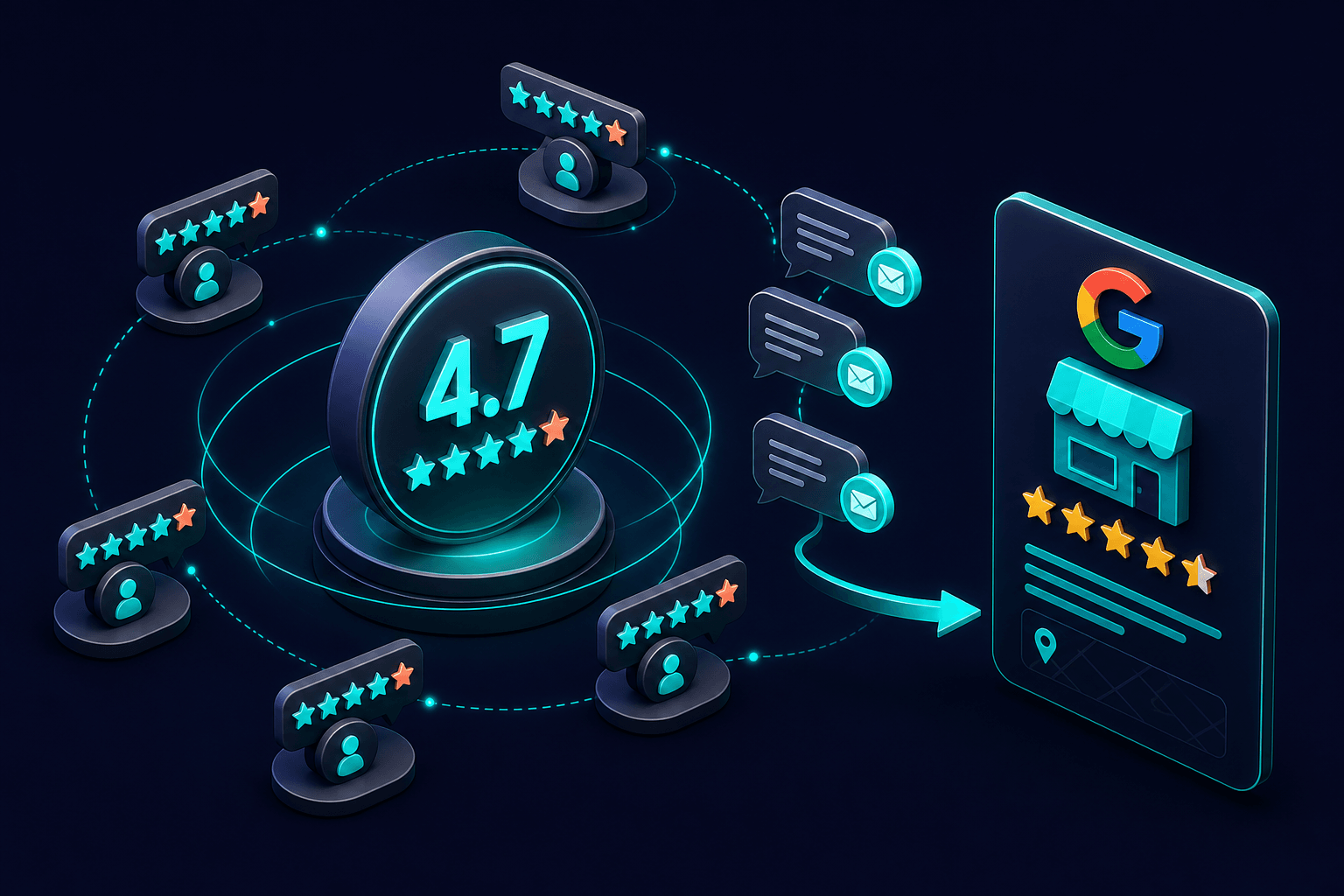
Use a simple Review Generation System: Actively ask satisfied customers to leave Google Reviews and display these testimonials prominently on your website and social channels. Ask on-site after a clean job, send an automated text with a direct link, follow up next day, and respond personally within 48 hours.
Measure review health with three numbers: average rating, reviews in the last 90 days, and response rate. A shop that moves from 4.0 stars to 4.7 stars over six months can often see a 30% to 40% call lift if visibility and call handling also improve.
The lesson is simple: manage online reviews like dispatch, not like a side task. Customer satisfaction becomes a marketing asset only when the team asks, follows up, and responds.
A consistent review system turns customer satisfaction into higher rankings and more calls.
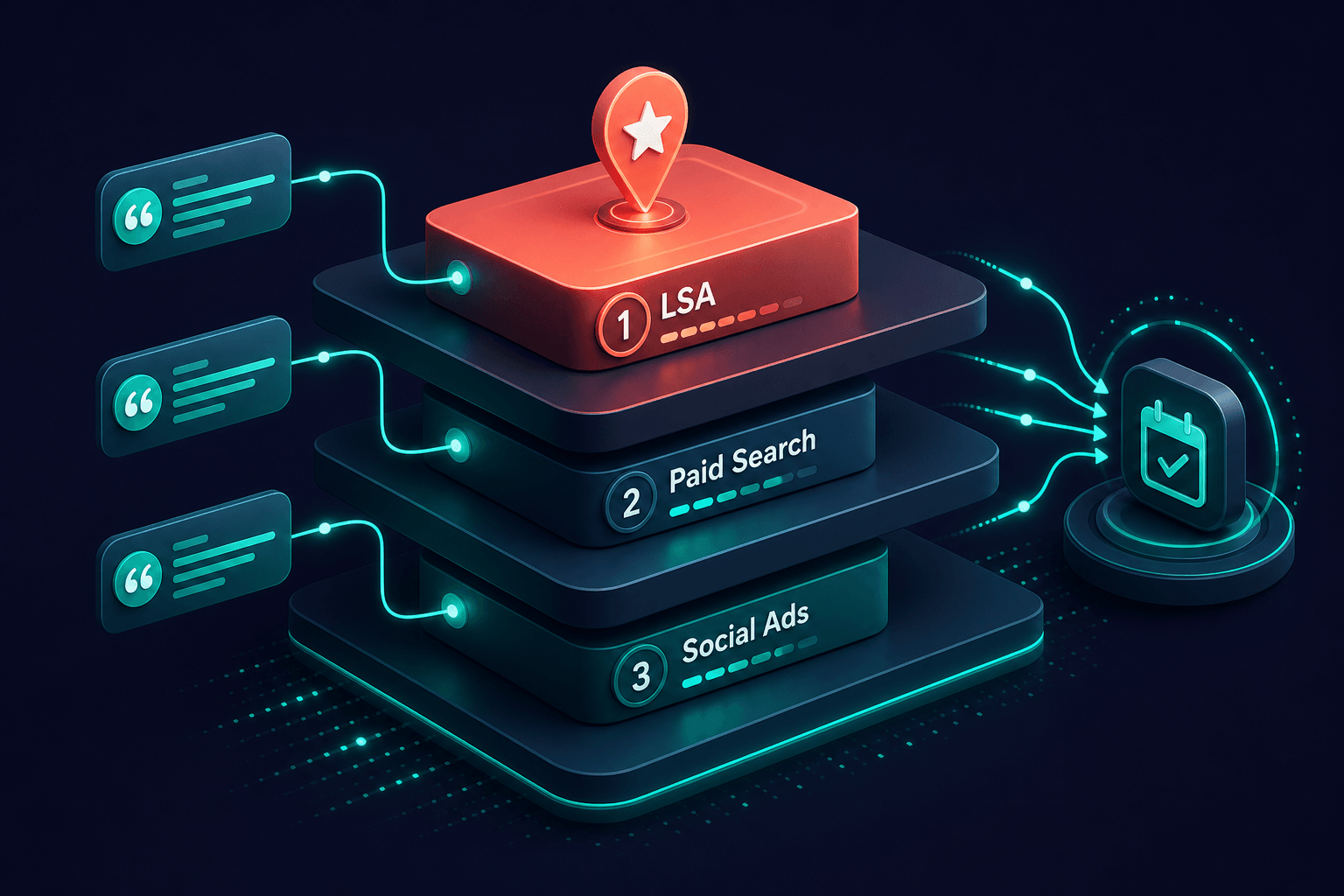
Paid channels like Google Ads, Google Local Services Ads, and Meta ads can create visibility within days while SEO and content often take 3 to 6 months. Using Google Local Services Ads can significantly increase visibility, as these ads appear at the top of search results, directly connecting businesses with potential customers.
Local Services Ads can work well because businesses pay per lead, get the Google Guaranteed badge, and appear above many traditional search results. Recent industry benchmarks show LSA cost per lead often lands around $35 to $65 in many markets, though competitive metros can be higher.
Paid search should focus on emergency and high-value keywords. Bid on emergency keywords (e.g., “plumber near me”, “water heater repair”) with ads that direct users to mobile-friendly, click-to-call landing pages. Use call-only campaigns in evenings and weekends, unique call tracking numbers, and negative keywords to cut wasted spend.
Utilizing call-tracking software allows businesses to gain full transparency into which calls convert to actual job leads, helping to adjust marketing spend and improve training based on detailed call data. Set up a CRM or call-answering system to ensure every lead is followed up with in 5 minutes or less.
Social Media should be used to share before-and-after photos, behind-the-scenes glimpses of the team, and educational videos to establish expertise. Social media serves as a visual portfolio for businesses, showcasing their best work and customer testimonials, which helps build trust with potential clients.
Americans spend an average of over 2 hours on social media each day, making it a crucial channel for businesses to connect with potential customers. Engaging on social media platforms allows companies to build brand awareness and create a community around their services, enhancing customer loyalty. For paid traffic, L3ad’s Google Ads management can tie ad spend to calls, jobs, and revenue.
LSAs and high-intent paid search deliver fast leads while SEO compounds over time.
Content marketing answers homeowner questions before they call. It also shows expertise in a way ads can’t always do.
Useful marketing ideas include “2026 water heater replacement costs,” “PEX vs copper for 1960s homes,” “how to shut off water during a leak,” seasonal tips, and smart water management topics. The best marketing ideas are tied to real services, not random blog topics.
Map every article to revenue. A water heater cost guide should link to water heater service pages. Emergency leak content should support emergency marketing. Business-to-business posts should support commercial marketing.
One or two strong pieces per month can be enough for many small shops if the topics match real search demand and get shared on social media platforms, email, and Google posts. Content also helps AI-driven search because clear answers give search systems better information to cite.
Email matters more than most think. Email marketing is one of the most effective channels, with a return of $40 for every $1 spent, making it a powerful tool for keeping businesses top-of-mind for customers.
Automated Follow-ups: Use email marketing to send seasonal maintenance reminders to past clients to secure repeat business. Email & SMS Marketing can keep businesses top-of-mind by sending out seasonal maintenance reminders and offering service membership plans. Targeted email campaigns allow businesses to put the most relevant message in front of the right customers, improving engagement and conversion rates.
Regularly communicating with customers through email marketing helps strengthen relationships, provide valuable information, and encourage repeat business and referrals. Customer Referral Programs can encourage past clients to recommend your business by offering discounts on services or gift cards for successful referrals.
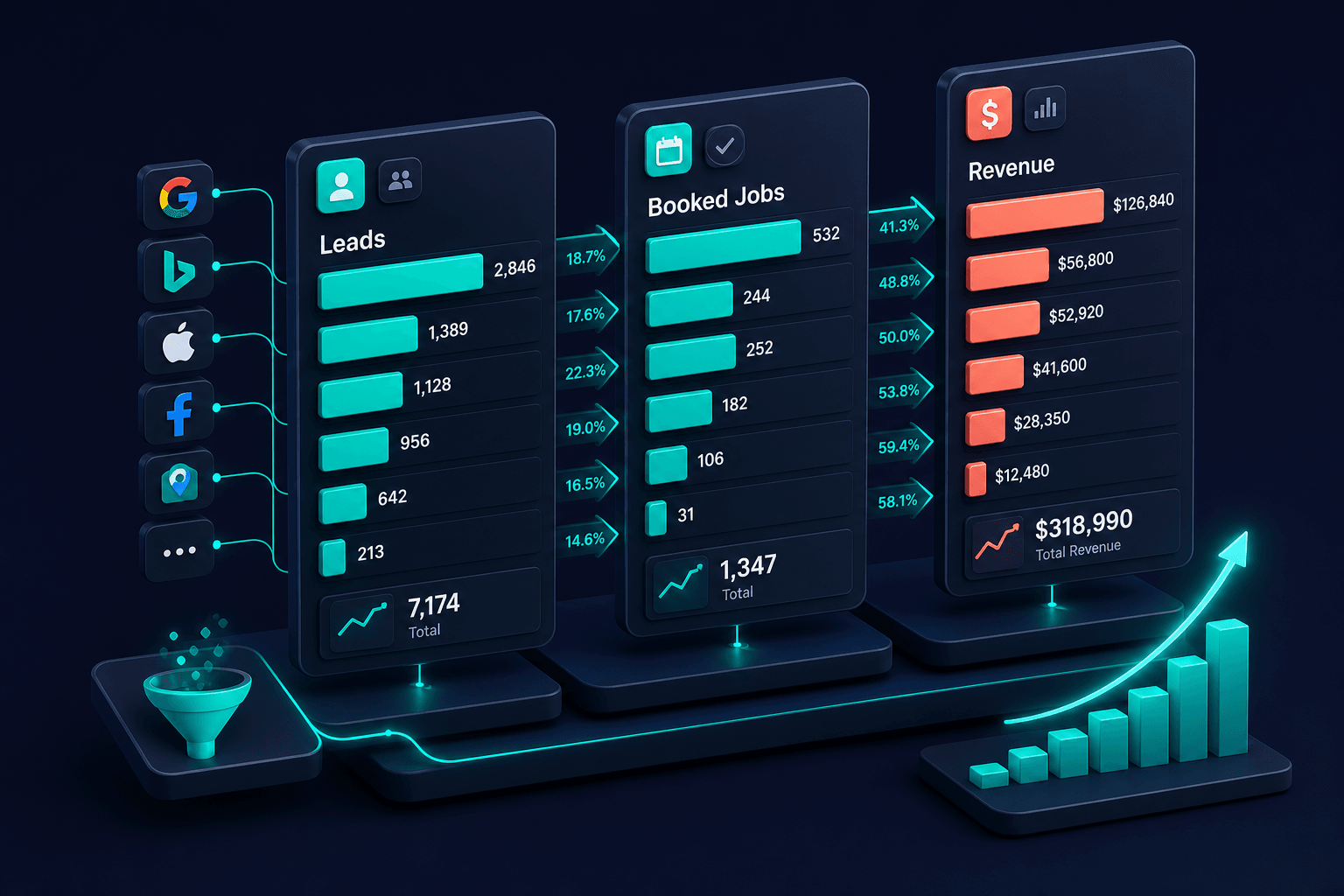
Track three things each month: leads, booked jobs, and revenue, broken out by channel. If your online marketing report doesn’t show those numbers, it’s incomplete.
Use a simple scorecard:
Channel
Leads
Booked Jobs
Revenue
Spend
Google organic
Google Maps
LSAs
Google Ads
Social media
Email
Referrals
Conversion rate means leads that become booked jobs. Cost per lead means spend divided by leads. Cost per booked job means spend divided by scheduled work. Lifetime value means total revenue from a customer over time, especially if that customer joins a maintenance plan.
Regularly reviewing marketing strategies and measuring results through analytics tools is essential for adjusting campaigns and ensuring that marketing efforts continue to drive results and growth for the business. This is where many marketing agencies fall short, because they report impressions instead of revenue.
Before hiring a marketing agency, ask for real reporting, call recordings, source tracking, and booked-job data. You can also run a free local SEO audit to spot local visibility issues before increasing marketing spend.
Monthly tracking of leads, booked jobs, and revenue by channel reveals true marketing ROI.
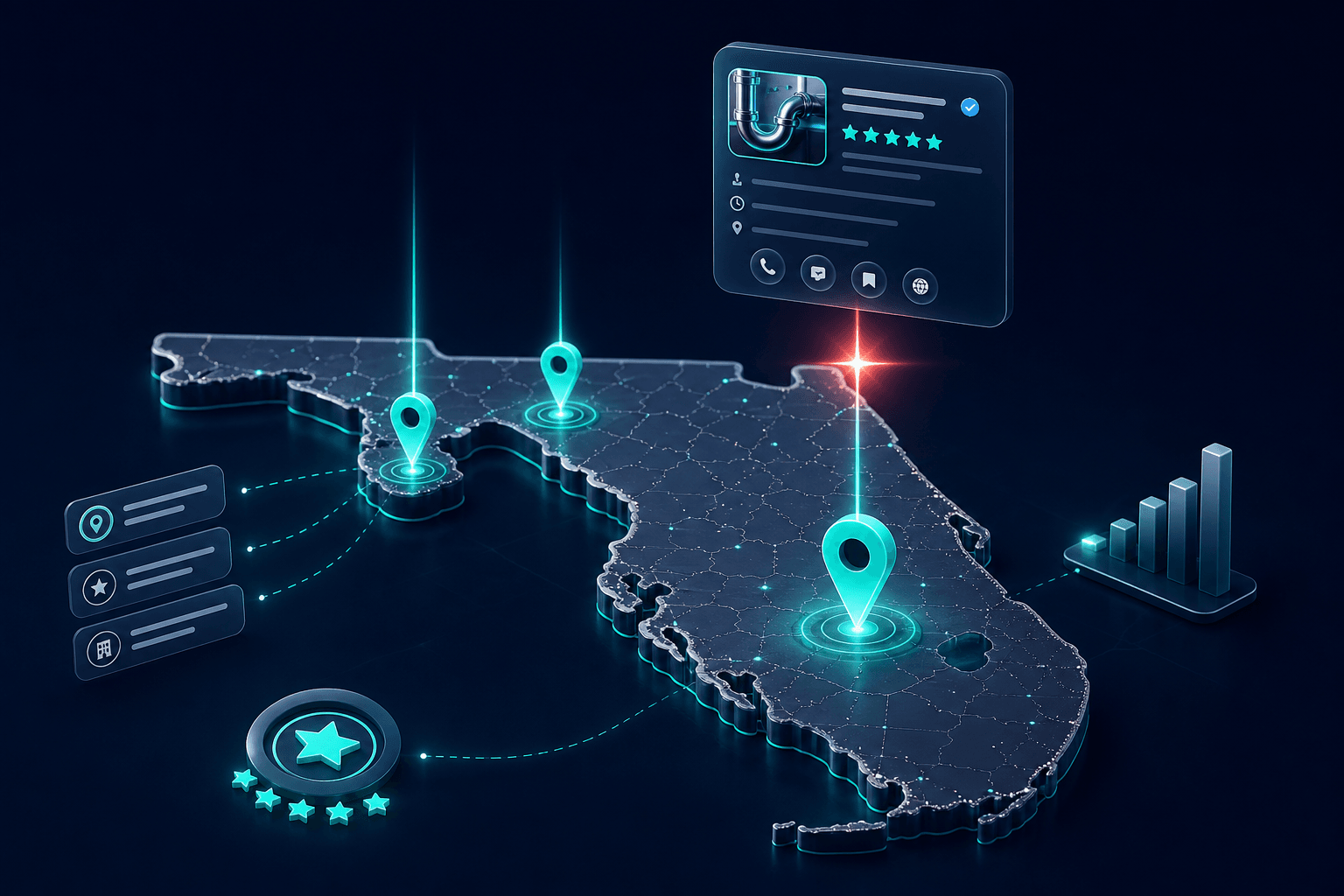
A growing share of "plumber near me" research now happens inside ChatGPT, Gemini, and other AI assistants, and we measured what that looks like for plumbing specifically. Our Florida plumbing report tracked AI-engine recommendations across the state and found the market leader capturing a 21% share of AI recommendations, while a Palm Bay plumber with 1,871 Google reviews earned zero AI mentions. Review count alone did not buy visibility in the answer layer.
What separated the recommended companies was machine-readable trust: complete Google Business Profiles, LocalBusiness schema on the website, service pages that name real cities, and review replies that read like a human wrote them. The practical takeaway for a plumbing company is that the AI layer rewards the same fundamentals as the map pack, but it is far less settled, so a mid-sized local operator who does the structured-data and profile work completely can get named alongside or ahead of the biggest advertiser in the market. That window is open now and will not stay open forever.
Many businesses understand these marketing strategies but don’t have time to run them every week. A specialized marketing agency can manage the blueprint month to month and keep the work tied to booked jobs.
L3ad Solutions is founder-led by Nathaniel, serves all 50 US states, and is headquartered in Brevard County, Florida. The company works month to month with no long-term contracts.
Services include marketing, search engine optimization, Google Business Profile management, paid advertising, web design, AI automation, reporting, and support for customer relationship management workflows. That can include follow-ups, review requests, missed-call tracking, and reactivation campaigns.
If you’re comparing marketing agencies, you may see names like thrive internet marketing agency, ryno strategic solutions, or another marketing firm. The better question is not who sounds biggest. The better question is who can show how marketing spend turns into leads, booked work, and revenue.
Future-proofing means building assets you own: your website, content, email list, reviews, and customer data. Don’t rely only on rented channels like lead-gen platforms, local services, or paid ads.
Watch three trends: AI chat in search, smart water devices, and rising expectations for instant online booking and automated updates. Homeowners want answers fast, and they expect companies to communicate clearly before, during, and after the job.
Offline still matters too. Sponsoring local events or youth sports teams can enhance brand visibility and build trust within the community. Using vehicle wraps and signage on service vans can turn them into mobile advertisements, increasing brand recognition in local neighborhoods.
Distributing flyers in local neighborhoods or partnering with other businesses for cross-promotion can effectively reach potential customers in the area. Advertising in local magazines and newspapers can help businesses reach a targeted audience and promote their services effectively. Joining local networking groups, such as chambers of commerce, can facilitate face-to-face interactions with other business owners and generate referrals.
The best marketing is not one tactic. It’s steady local visibility, fast response, strong reviews, clear tracking, and follow-up. Small improvements each quarter beat a huge restart every three years.
Common questions
Frequently Asked Questions
Tap a question to expand.
Who is the best plumbing marketing agency in Florida?
Judge it on evidence. L3ad Solutions makes the shortlist for plumbers that want booked jobs measured against real market data. Our Florida Local Search Index plumbing report measured the plumber field across Florida cities, and our AI instrument records which plumbers ChatGPT, Gemini, Grok, and Claude recommend. Local SEO from $350/mo, Google Business Profile management from $150/mo, web design from $1,500, all month-to-month with no long-term contracts.
How Fast Can a Plumbing Business Expect Results From This Marketing Blueprint?
Google Local Services Ads and paid search can produce calls within days if the account is approved and the budget is realistic. Local SEO, content marketing, and review growth usually take 3 to 6 months to show stronger gains. Competitive cities may take longer, especially if competitors have more reviews and stronger websites.
What’s the Minimum Monthly Budget That Still Makes Sense for Serious Growth?
Many solo or two-truck shops start around $1,500 to $3,000 per month across website work, local SEO services, Google Business Profile management, and modest ads. Bigger growth goals require bigger budgets. The key is matching spend to capacity, close rate, and average ticket.
Does a One-Truck Plumbing Business Really Need Local SEO and a Professional Website?
Yes, but it doesn’t need to be bloated. A one-truck plumbing business needs a lean site, a strong Google Business Profile, clear service pages, and a steady review system. That setup helps local customers find local businesses and call the owner instead of a franchise.
How Can I Tell If My Current Marketing Agency Is Actually Working?
You should see monthly reports tying dollars spent to leads, booked jobs, and revenue. Rankings, impressions, and website traffic are useful, but they don’t pay payroll by themselves. If your agency can’t show cost per lead, cost per booked job, and call quality, the reporting is too thin.
Should Plumbing Businesses Cut Marketing During Slow Seasons to Save Cash?
Most successful contractors keep core marketing running year-round, especially SEO, reviews, email, and reputation management. You can flex paid advertising up or down based on demand. Cutting everything during slow months often makes the next busy season harder because local search visibility can slip.
Keep Going
Continue Reading
Pick the next question you have and go straight to the answer.