HVAC Marketing Plan 2026: How To Build A Strong, Data-Driven Strategy That Actually Books Jobs
Clear revenue goals, a 7-10% budget, and a channel mix built for seasonality, AI search, and booked jobs.
HVAC MarketingMarketing StrategyLocal SEO
TL;DR
• A strong HVAC marketing plan 2026 sets clear revenue goals, funds marketing at 7-10% of gross revenue, and mixes local SEO, LSAs, PPC, reviews, email, and automation.
• AI search, online reviews, and reputation management will heavily influence HVAC search results and booking decisions in 2026.
• Recruiting techs and winning customers now share the same assets: your website, Google Business Profile, social media, and customer testimonials.
Most HVAC companies should plan a 7-10% HVAC marketing budget, with newer companies often needing 12-15% to gain market share.
Your mix should include local SEO, google local services ads, google ads, email marketing, reviews, and a conversion-focused hvac website.
AI search, online reviews, and reputation management will heavily influence HVAC search results and booking decisions in 2026.
A strong HVAC marketing plan aligns goals, offers, targets, and channels, then tracks everything with call tracking and dashboards.
Recruiting techs and winning customers now share the same assets: your website, google business profile, social media marketing, and customer testimonials.
L3ad Solutions is a month-to-month HVAC marketing agency serving hvac companies across the US with no long-term contracts.
Clear 2026 goals drive every hvac marketing decision, including local SEO, content marketing, paid advertising, and email. A well-structured HVAC marketing plan should include clear goals, such as the number of new customer leads desired per month and the percentage of revenue to be spent on marketing.
Good goals should cover:
New residential leads per month
New commercial HVAC marketing opportunities
Maintenance agreements sold
Average ticket size by service type
Revenue by season
Booking rate by marketing channel
Replacement estimates closed
For example, a $1M hvac business targeting 15% year-over-year growth might aim for $1.15M in 2026 revenue, 100 new maintenance plan customers, and 50 qualified leads per month. That target should be split between new customers, existing customers, and repeat service call opportunities.
Goals must match capacity. If an HVAC contractor has four techs, two trucks, and no dispatcher, a huge lead generation push can hurt reviews fast.
Before you increase ad spend, ask:
How many service calls can we handle per day?
How many installs can we complete per week?
Do we need another tech before peak season?
Can the office answer calls within minutes?
Are parts and equipment available for promoted offers?
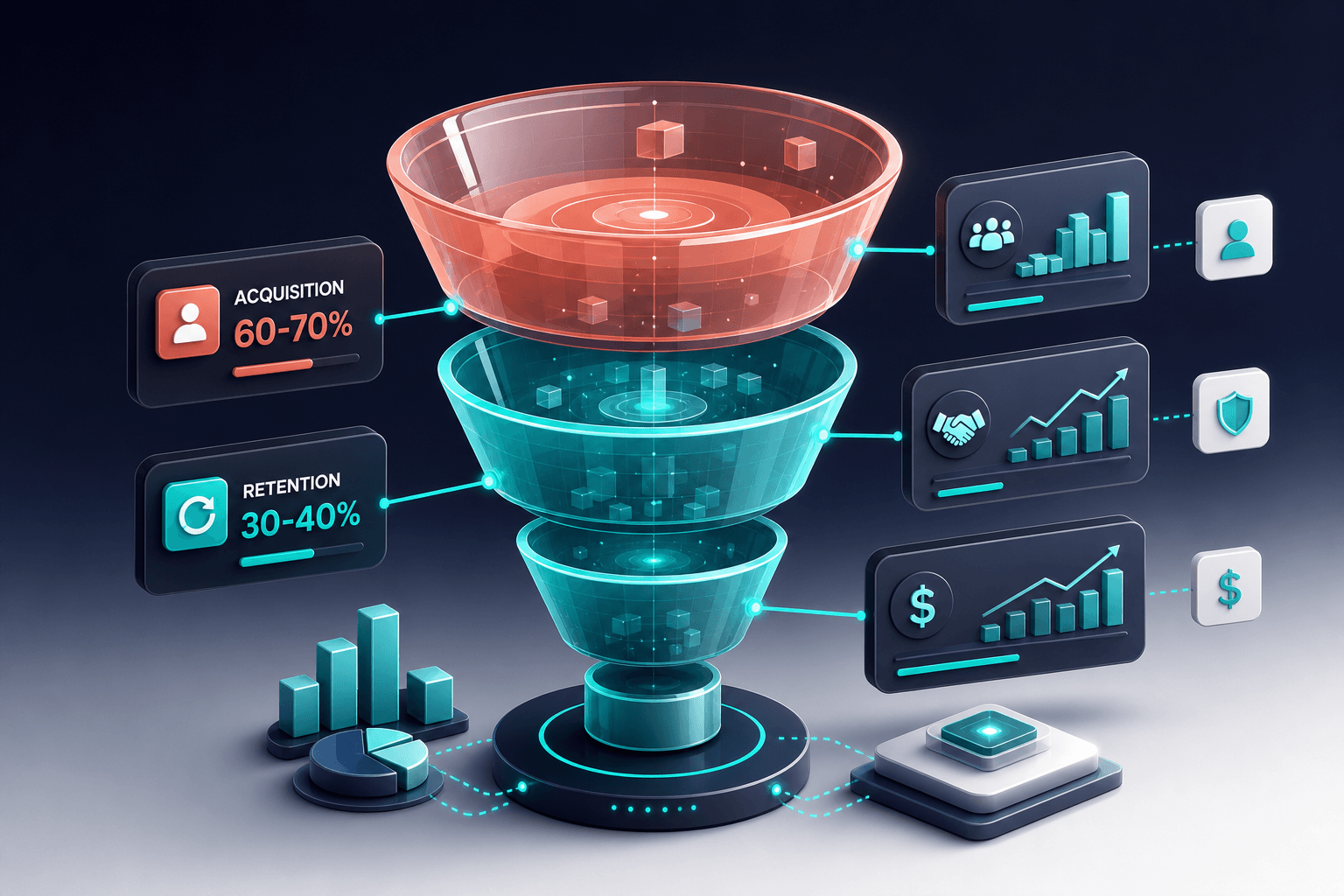
Acquisition and retention need separate goals. A practical split for most HVAC companies is to allocate 60-70% of their marketing budget toward customer acquisition and 30-40% toward customer retention.
That thinking matches the logic behind an honest marketing budget: don't spend like a national brand if your team can't fulfill the work. Spend to grow, but tie marketing dollars to real capacity.
Clear revenue goals and budget allocation form the foundation of a 2026 HVAC marketing plan.
Reviewing 2025 data prevents repeat mistakes and gives hvac business owners realistic 2026 targets. The best hvac companies track leads, booked jobs, revenue, and close rates by channel, not just total call volume.
Pull these numbers before you build your 2026 marketing plan:
Metric
Why It Matters
Leads by channel
Shows what produced hvac leads
Cost per lead
Shows channel efficiency
Cost per booked job
Shows real acquisition cost
Close rate
Shows sales and dispatch quality
Average ticket
Shows revenue potential
Revenue per channel
Shows true ROI
Seasonality
Shows when spend was too high or too low
Break channels into local services ads, google ads, organic search, referrals, direct mail, social media, email, and local business listings. If Google Ads produced 100 leads but only 20 booked, the cost per booked job matters more than the cost per lead.
Use Google Analytics, call tracking, CRM reports, LSA reports, and Google Ads reports. A customer relationship management system should show which calls became booked jobs, estimates, maintenance agreements, or lost opportunities.
You can also run a free local SEO audit to check website traffic, visibility, rankings, and local search gaps. This helps connect your website data to real lead flow.
Compare summer, winter, and shoulder seasons. Marketing efforts should be aligned with seasonal demands to maintain consistent lead flow throughout the year.
Many hvac owners discover they overspent during peak demand and underinvested before demand arrived. March, April, September, and October are often where smart planning lowers peak-season cost per acquisition.
The biggest hvac marketing trends for 2026 are AI search, talent shortages, cautious homeowners, refrigerant transition education, and plateauing LSA volume. In 2026, effective HVAC marketing plans should focus on Google Business Profile optimization, refrigerant transition education, and AI-integrated local search.
Key trends to plan for:
AI-integrated search engines favor highly relevant local results, making the optimization of Google Business Profiles essential.
AI Overviews and generative answers reward clear FAQs, service pages, reviews, and local proof.
Talent shortages mean your website and reviews must sell the company to techs, not just homeowners.
Homeowners are cautious on big-ticket replacements because of interest rates, energy costs, and equipment prices.
Educational content about energy efficiency and new technology can be effective in building trust.
LSAs will remain useful, but lead volume can cap out in crowded markets.
Our planning benchmark: AI-influenced leads can convert 10-20% better when websites have clear FAQs, service areas, transparent pricing ranges, and simple next steps. That's not magic. It removes doubt before the homeowner calls.
Generative engine optimization means formatting content so AI tools can understand and cite it. If you want deeper context, read our guide to generative engine optimization.
Content should also explain A2L refrigerants, heat pump incentives, financing, and repair versus replacement. Homeowners don't want scare tactics. They want a straight answer on their hvac system.
Shifting focus towards recurring maintenance agreements can help stabilize cash flow in the HVAC industry. That makes maintenance agreement marketing more important in 2026 than one-off coupon blasts.
Tight targeting reduces wasted spend and improves lead quality for residential, emergency, and commercial HVAC campaigns. A good hvac marketing strategy starts with who you want, what they need, and how urgently they need it.
Segment your potential customers by:
Residential HVAC marketing versus commercial HVAC
Emergency HVAC versus planned replacement
Maintenance plan prospects
Heat pump buyers
IAQ and ductwork customers
High-value ZIP codes
Existing customers with older equipment
A residential target might be homeowners ages 30-65, household income above $75,000, in ZIP codes within a 20-30 minute drive of the shop. That matters because profitable service radius beats raw lead count.
Use Google Ads and Facebook Ads geofencing to match campaigns to real drive times. Don't pay for clicks 45 minutes away unless the average job value supports it.
Search intent should guide keywords and landing pages. Someone searching ac repair needs a fast call button. Someone searching "best heat pump 2026" needs education, rebates, savings, and financing.
The best hvac marketing ideas match the buyer's urgency. Emergency HVAC marketing should focus on speed and availability, while replacement campaigns should focus on trust, options, and long-term value.
Trust-focused brand positioning will beat aggressive, discount-only HVAC advertising in 2026. Homeowners are comparing price, reviews, speed, financing, and whether your recommendations feel honest.
Your offer should be simple:
Fast response
Honest recommendations
Fair pricing
Clear maintenance education
Financing options
Strong warranties
Real people behind the brand
Short-term coupons can fill gaps, but they shouldn't define your company. Long-term value offers like 10-year warranties, maintenance memberships, second-opinion inspections, and financing build a better brand.
Show real technicians, trucks, office staff, and install photos on the website and social media. Stock photos don't build the same trust as real people doing real HVAC work.
Strong branding helps justify higher prices and improve close rates. Reviews, case studies, and service proof matter more than claiming to be "the best."
Lists of top hvac marketing agencies are less useful than proof that a team understands your local market, your margins, and your capacity. That's where HVAC marketing services should connect strategy to booked jobs.
Every channel, from Google Local Services Ads to email, sends people to the hvac website. Over 60% of HVAC searches occur on mobile devices, necessitating mobile-first website strategies.
Your site needs fast load times, clear service pages, sticky click-to-call buttons, and trust signals above the fold. If a homeowner has no heat or no AC, they won't hunt for your phone number.
Essential pages include:
AC repair
Furnace repair
Heat pumps
Ductless mini splits
Emergency service
Maintenance plans
Financing
Service area pages
Why choose us
Reviews and testimonials
Trust signals should include licenses, insurance, online reviews, photos of techs, guarantees, and warranties. Real customers who leave positive reviews help build trust in your business, with prospective customers reading an average of 10 reviews before trusting a business.
A conversion-focused hvac website should make the next step obvious. Call, schedule, request an estimate, or join a maintenance plan.
Content marketing means practical homeowner answers, not filler posts written only for search engines. Good HVAC content improves search rankings, AI visibility, and onsite conversion by reducing anxiety.
Useful content types include:
Question-based blog posts
Seasonal maintenance checklists
Energy savings explainers
Heat pump rebate guides
Repair versus replacement pages
"What to expect" service pages
Examples:
"AC repair vs replacement in 2026"
"Heat pump rebates guide"
"How long does a furnace last?"
"Why does my AC run but not cool?"
"What changed with refrigerants after 2025?"
84% of consumers search online before contacting an HVAC company, making online visibility crucial for lead generation. That makes content more than an SEO task. It's sales support.
If your page answers the question before your competitor does, you're more likely to earn the call. Google also penalized generic "city pages" in March 2026, encouraging marketers to create unique, hyper-local content. Don't copy the same paragraph across 50 towns. Add real service details, neighborhoods, photos, and local proof.
Local SEO is the backbone of long-term HVAC lead generation, especially as LSAs level off and CPCs rise. Local SEO is how homeowners find HVAC services when they are not clicking on ads, generating warm, high-intent leads at a lower cost.
Housecall Pro reports that companies in the top 3 map results pay 40% less per customer than those using paid ads. That single stat explains why search engine optimization and map visibility deserve a serious budget.
Core local SEO pieces include:
Verified google business profile
Accurate categories
Consistent citations
Service-area pages
Local schema markup
Review growth
Fast mobile pages
Unique local content
84% of consumers search online before contacting an HVAC company, and 71% of mobile clicks go to organic and map listings, highlighting the importance of optimizing for local intent keywords.
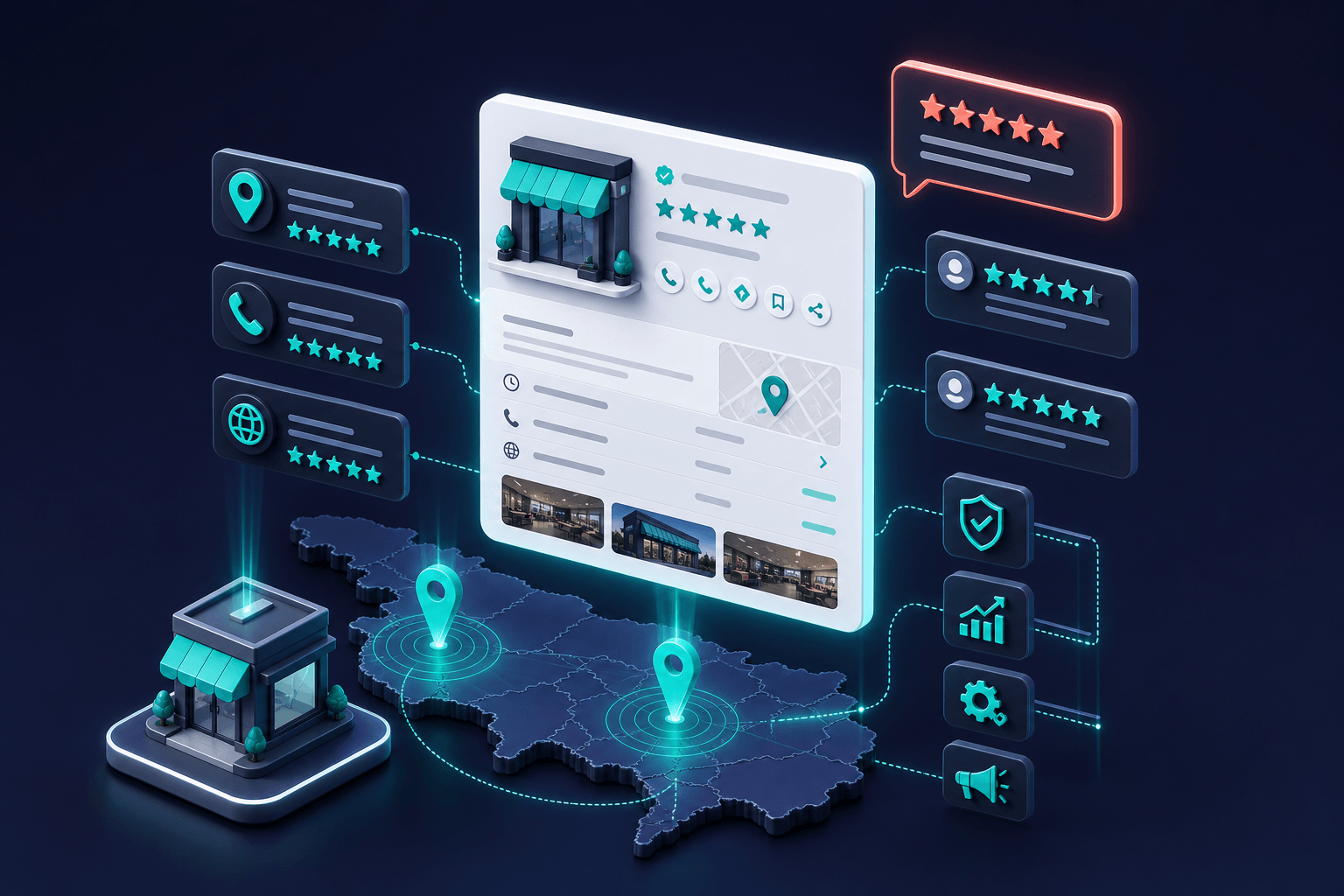
A well-optimized Google Business Profile can help your HVAC company appear on Page 1 of organic Google results when potential customers search for HVAC services in your area. It is a key factor in how Google determines which businesses to show in local results.
A 6-12 month hvac seo roadmap should cover technical fixes, content topics, review targets, service pages, and citation cleanup. Use local SEO fundamentals if you want the basics in plain English, and local SEO services if you want it handled.
GBP is often the first thing homeowners see, and it drives calls, directions, reviews, and local search visibility. Verifying your Google Business Profile is essential for attracting new customers and does not incur any costs.
Optimize:
Primary category: HVAC contractor
Secondary categories: air conditioning repair, heating contractor, furnace repair
Service areas
Business description
Service list
Photos of installs, team, trucks, and shop
Hours and holiday hours
Booking link
Call tracking
Google Business Profile rankings are influenced by relevance, distance, and prominence, which includes the number of reviews and the average rating. Businesses with a complete and actively managed profile are more likely to outrank competitors with neglected profiles, even if the latter have been in business longer.
Regularly updating your Google Business Profile with accurate information, including business hours and service descriptions, signals credibility to Google and can improve local search rankings. Weekly posts with offers, tips, seasonal reminders, and job photos show activity.
Tie GBP to google local services ads, review campaigns, and call tracking. For deeper help, see our GBP optimization for HVAC.
A fully optimized Google Business Profile is the cornerstone of local visibility for HVAC companies.
LSAs and PPC remain essential for fast hvac leads, but they must be paired with SEO, reviews, and reputation management. Google Local Services Ads are a pay-per-lead product that can produce leads at a lower cost per acquisition than standard Google Ads, making them a highly effective channel for HVAC lead generation.
In 2026, LSA leads often range from about $42-$75, with many HVAC markets averaging near $51 per lead. Standard google ads vary more: the average cost per lead from Google Ads for HVAC companies ranges between $50 and $150, depending on market conditions and seasonality.
Track cost per booked job, not just cost per lead. If a $75 LSA lead books at 40%, your cost per booked job is $187.50 before labor, overhead, and follow-up.
Use ppc ads for gaps:
Brand protection
Emergency terms
Carrier, Trane, Lennox, and Rheem searches
Ductless mini splits
Heat pumps
ZIP codes outside LSA strength
Commercial service searches
LSAs can plateau because Google shares finite local demand among competitors. Treat them as one part of an hvac advertising system, not the whole plan.
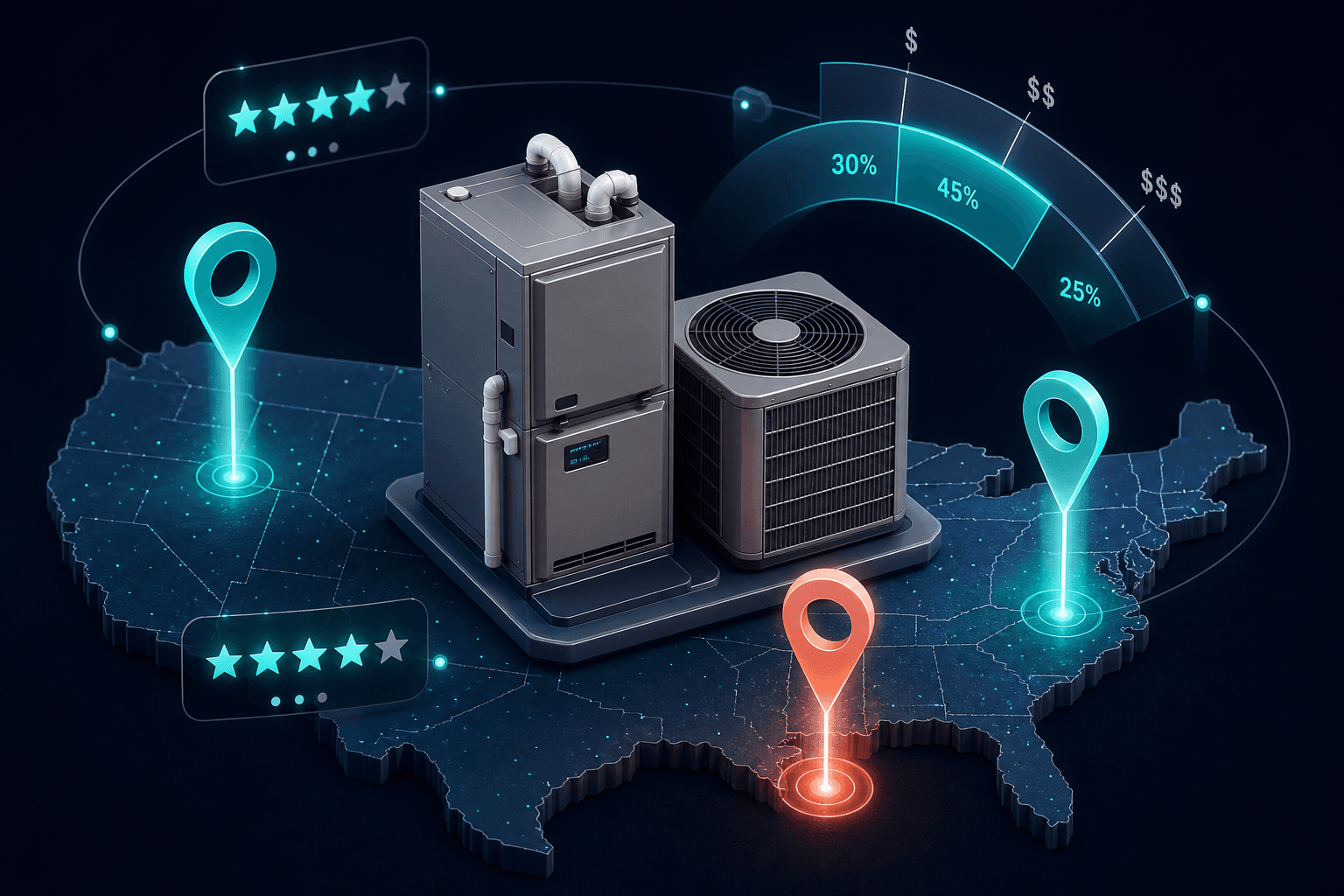
Most HVAC companies should plan 7-10% of 2026 gross revenue for the overall hvac marketing budget, with newer companies aiming for 12-15% to gain market share. Aggressive growth, new markets, or private equity-backed expansion can justify 10-20% of sales.
A practical split:
Budget Area
Share
LSA, PPC, paid lead generation
35-50%
SEO and content
25-35%
Email, reviews, tools, branding
15-25%
Testing and seasonal promotions
5-10%
A $1.2M hvac business might spend $8,000-$10,000 per month on mixed digital marketing. That could include $4,500 for LSA and PPC, $2,500 for SEO and content, and $1,500 for email, reviews, tools, and website updates.
L3ad Solutions offers month-to-month digital marketing services, so budgets can be adjusted quarterly based on performance.
Online reviews will be as important as price and response time for homeowners choosing an HVAC company in 2026. Consumers increasingly rely on reviews and social proof when selecting service providers.
The numbers are blunt:
81% of consumers use Google reviews to evaluate home service companies, making reviews a critical factor in customer decision-making.
94% of consumers said positive reviews make them more likely to use a business.
82% of customers read online reviews for local companies, and more than half won't consider hiring a company with less than a 4-star rating.
Companies should aim for at least 20 Google reviews quickly, as social proof significantly influences homeowners' decisions.
The best time to ask for reviews is immediately after job completion, as customer satisfaction is highest at that moment. Use automated text and email requests with direct Google links.
Use reviews in:
Website testimonials
PPC ad copy
Social posts
Email campaigns
Sales scripts
Technician bios
Local landing pages
Check your review health score and compare it to your top competitors. Then build review requests into every completed hvac service call. The local reviews playbook covers the full system.
Calm, honest responses can turn a bad review into a trust-building moment for future customers. Don't argue in public, even if the customer is wrong.
Use this formula:
Acknowledge the issue.
Apologize when appropriate.
Offer to fix it offline.
Leave a name and phone number.
Example for a missed appointment:
"Thanks for letting us know. We're sorry the appointment window was missed. That's not the experience we want. Please call our office at [number] so we can review the schedule and make this right."
Monitor reviews weekly or use software alerts. A negative review left unanswered for months tells prospective customers you're not paying attention.
Social media marketing supports brand awareness, recruiting, and retargeting more than direct same-day HVAC calls. It still matters because local customers check your company before they book.
Focus on Facebook, Instagram, and sometimes TikTok. Most hvac businesses don't need to post everywhere. They need consistent, local proof.
Good content includes:
Short videos from techs
Before-and-after install photos
Maintenance tips
Team introductions
Community posts
Seasonal promotions
Customer testimonials
Safety and training content
Boost posts within your service area for spring AC tune-ups and fall furnace checks. Geo-targeted ads work best when the audience matches your real drive radius. For help, see social media marketing.
Social content also feeds retargeting. Someone who visited your financing page can later see an install offer, review post, or maintenance reminder.
Techs and installers check your social media before applying, just like homeowners check it before booking. Your brand now sells jobs and careers.
Post culture photos, training days, safety meetings, new truck arrivals, birthdays, and tech spotlights. Show what working there actually feels like.
Job posts should link back to a careers page on the hvac website. That page should explain pay ranges, benefits, training, schedule expectations, and growth paths.
Use retargeting audiences to show recruiting ads to people who have engaged with the brand. Merging recruiting and customer marketing assets saves time and creates a consistent story.
Email is one of the lowest-cost channels for repeat business, maintenance agreements, and referrals. Targeted HVAC email marketing is considered one of the most effective marketing channels today, earning $40 for every $1 spent.
Email marketing keeps your company in front of customers between service calls, promoting maintenance agreements and filling slow-season slots. Sending a seasonal tune-up email to 500 existing customers costs less than $50 a month with a basic email tool, and even one conversion can pay for a full year of email marketing.
Build simple hvac email marketing sequences:
Post-service follow-up
Review request
Maintenance reminder
Unsold estimate follow-up
Seasonal tune-up campaign
Financing reminder
Referral request
Equipment age alert
Send a monthly or bi-monthly newsletter with one clear call to action. Keep it useful: filter reminders, rebate updates, weather prep, reviews, and limited seasonal offers.
Track opens, clicks, booked jobs, unsubscribes, and revenue. Clean bad addresses so reports stay accurate.
Automation handles repeat tasks so owners, dispatchers, and techs can focus on jobs and customer service. The goal isn't replacing people. The goal is fewer missed opportunities.
Automate:
Review requests
Lead response texts
Missed-call texts
Follow-up emails
Maintenance reminders
Unsold estimate follow-ups
Appointment confirmations
Seasonal campaign triggers
Fast speed-to-lead responses, even automated, can double or triple booking rates from paid campaigns. If a homeowner needs emergency AC repair, five minutes can matter.
Tracking cost per lead and cost per booked job by channel is the only way to know if the HVAC marketing plan is working. HVAC companies should regularly review their marketing strategies and adjust their budgets based on the performance of each channel to maximize ROI.
Use separate call tracking numbers for:
SEO
LSAs
PPC
Direct mail
Social ads
Email
Website forms
Local service business listings
Track these monthly:
Metric
Target Question
Leads per channel
Where are inquiries coming from?
Booking rate
Which leads become jobs?
Average job value
Which work is most profitable?
Revenue per channel
Which channel pays back?
Cost per booked job
What does growth really cost?
ROI
Should budget move?
Use dashboards, but don't make them complicated. A spreadsheet with calls, booked jobs, revenue, and spend can beat fancy reports nobody reads.
Growing hvac companies usually review dashboards weekly and move budget quarterly. If one marketing campaign is producing poor-fit calls, fix targeting or pause it.
A smart hvac digital marketing plan also tracks calls missed by the office. Missed calls are paid leads slipping through the cracks.
Review dashboards weekly, budget and channel mix monthly, and the full strategy at least once per quarter. That rhythm keeps your marketing efforts tied to real revenue.
A simple schedule works:
Weekly: lead volume, missed calls, ad spend, reviews
Monthly: channel ROI, booked jobs, average ticket
Quarterly: budget shifts, campaign changes, new offers
Late Q3 or early Q4: next year's marketing plan
Consistent review prevents overspending on weak channels and missing shifts in hvac marketing trends. It also helps you see when recruiting, trucks, or dispatch capacity must catch up.
Benchmarks beat vibes, so here is what our Florida Local Search Index shows about the bar across the local service categories we audit, HVAC included. The typical top-ranked HVAC listing carries 1,170 reviews in Tampa and 1,131 in Orlando, while the broader Brevard County market averages 69% Google Business Profile completion, a median of 66 reviews, and only 2.1% of businesses posting weekly.
For an HVAC company the reading is simple: the pack is not won by a secret. It is won by a complete profile, a review-asking habit that survives the summer rush, and a site that loads fast on a phone in a driveway. Emergency AC searches convert on whoever shows up first and looks trustworthy, so every point of that checklist compounds during exactly the weeks you make your year.
L3ad Solutions is a US-based digital marketing agency specializing in HVAC marketing services with month-to-month terms and no long-term contracts. We're founder-led by Nathaniel, headquartered in Brevard County, Florida, and serve HVAC companies across the country.
Judge it on evidence. L3ad Solutions makes the shortlist for contractors that want booked service calls measured, not promised. The Florida Local Search Index measures local search competition across 93 cities and 67 counties, and our AI instrument records which HVAC companies ChatGPT, Gemini, Grok, and Claude recommend. Local SEO from $350/mo, Google Business Profile management from $150/mo, web design from $1,500, all month-to-month with no long-term contracts.
What's the minimum marketing budget that still makes sense for a small HVAC company in 2026?
Even a $500K revenue HVAC company should aim for at least 7% of revenue, about $2,900 per month. Split it between GBP, local SEO, a modest LSA budget, reviews, and basic email tools. Going far below that often means flat or shrinking lead volume.
How should an HVAC company market during slow shoulder seasons without wasting money?
Shift some paid budget from pure emergency ads to maintenance plan campaigns, content creation, GBP updates, and email. Work done in March-April and September-October often lowers summer and winter cost per lead and creates more predictable booked jobs when demand spikes.
Is it still worth paying for third-party lead services in 2026?
Some markets can still profit from Angi or similar services, but cap spend and track cost per booked job carefully. Owned channels like SEO, LSAs, email, reviews, and Google Maps visibility build brand equity. Third-party leads usually rent attention instead of building long-term demand.
How can multi-location HVAC companies structure a unified 2026 marketing plan?
Use shared brand standards, one central website, location-specific GBP profiles, local SEO pages, and review campaigns. Keep the same call tracking, CRM, and dashboards across locations. Budgets can vary by local market, competition, revenue, and seasonality.
What should change in my HVAC marketing plan if I add a new service like heat pumps or IAQ in 2026?
Add dedicated service pages, GBP service updates, new SEO and PPC keywords, and content explaining rebates and benefits. Then announce it through social posts and email to existing customers. Aim to make the service visible across major marketing channels within 60-90 days.
Keep Going
Continue Reading
Pick the next question you have and go straight to the answer.