

Get Your Business Cited by ChatGPT
How to get your business cited by ChatGPT and AI search: the sources they read, the on-site changes that matter, and what our four-engine data shows works.
Updated March 3, 2026 · 15 min read
Table of Contents
• AI search engines like ChatGPT can cite your local business, boosting visibility. • Optimize with structured, authoritative content using schema markup and clear service descriptions. • Focus on Google Business Profile and consistent directories. • In Florida, where competition is fierce, AI citations help small businesses stand out in local queries.
What Is AI Search and How Does It Affect Local Businesses?
AI search is transforming how people discover and consume information online. Unlike traditional search engines that simply list relevant web pages, today’s AI-powered search engines, driven by large language models and generative AI, deliver direct, conversational answers to user queries. This evolution means that users expect immediate, concise answers rather than sifting through multiple links.
For local businesses, this means a new discipline: Generative Engine Optimization (GEO). GEO is about structuring your content so AI search engines can understand, extract, and present your information as direct answers. It takes more than just keywords. Your content has to be structured, authoritative, and written in natural language that AI models can parse.
To thrive in the era of AI search, businesses need to ensure their content is machine-readable, semantically clear, and directly addresses the questions users are asking. By embracing generative engine optimization, especially GEO for local businesses, you position your brand to be discovered not just by people, but by the AI systems shaping how everyone consumes information online.
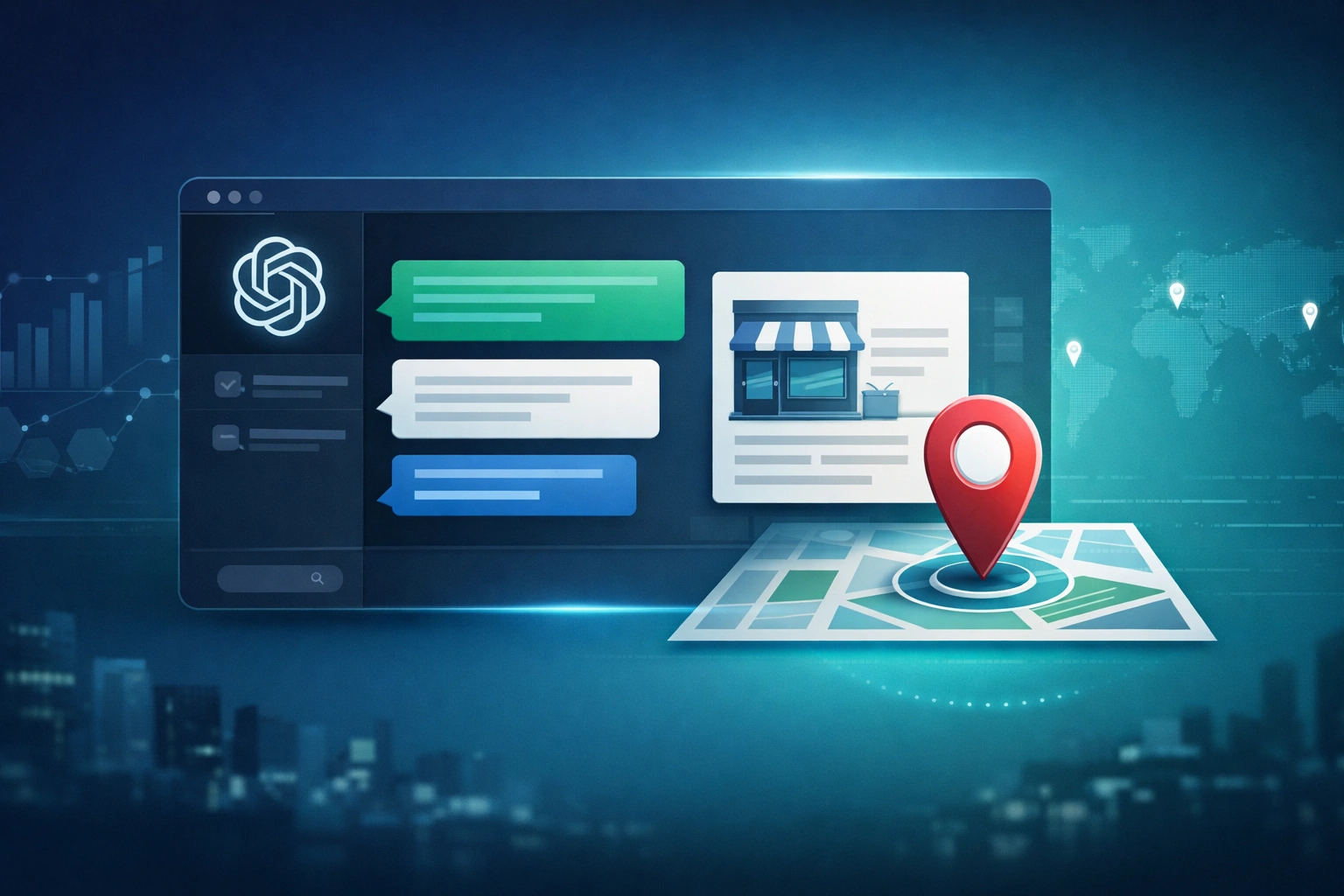
AI search engines are changing how local businesses are found by delivering direct answers.
Why Should Local Businesses Care About ChatGPT Citations?
TL;DR: ChatGPT citations happen when the AI references your business information while answering user queries. For local businesses, this creates a visibility channel where potential customers discover your services through AI conversations, without typing anything into Google. With over 1.8 billion monthly ChatGPT visits and 15-20% involving search queries, optimizing for AI search answers is becoming essential for competitive advantage.
Getting cited by ChatGPT requires clear, authoritative content that AI systems understand and can reference easily. Unlike traditional search where you’re competing for clicks on a results page, AI generated responses pull specific information from your content and present it directly to users. The traditional SEO funnel has evolved, making it harder to connect rankings to ROI, so businesses now need to focus on visibility in AI results. Staying visible in AI results means your business information is surfaced directly in AI-driven outputs, which is critical as AI search visibility and analytics become more important. When someone asks ChatGPT “Who’s the best service provider in Titusville?” and your business gets mentioned, that’s a citation worth its weight in gold.
Here on Florida’s Space Coast, where over 50,000 small businesses compete for attention, we’ve watched local companies go from invisible to AI platforms to earning consistent brand mentions simply by restructuring how they present information online. This isn’t rocket science, though we are in rocket country, it’s about understanding how large language models consume information online and adapting your content strategy accordingly. A strong local SEO foundation makes AI citation much more likely.
Put these strategies to work and you'll gain:
- A clear understanding of how ChatGPT finds and cites local business information
- Practical steps to make your website content machine readable for AI crawlers
- Knowledge of what content quality signals matter most for AI visibility
- A checklist for optimizing your online presence across platforms
- Methods to track and measure your AI search visibility over time
- Direct visibility in AI conversations without traditional search clicks.
- Competitive edge with over 1.8 billion monthly ChatGPT visits.
- Brand mentions for Space Coast businesses through content restructuring.
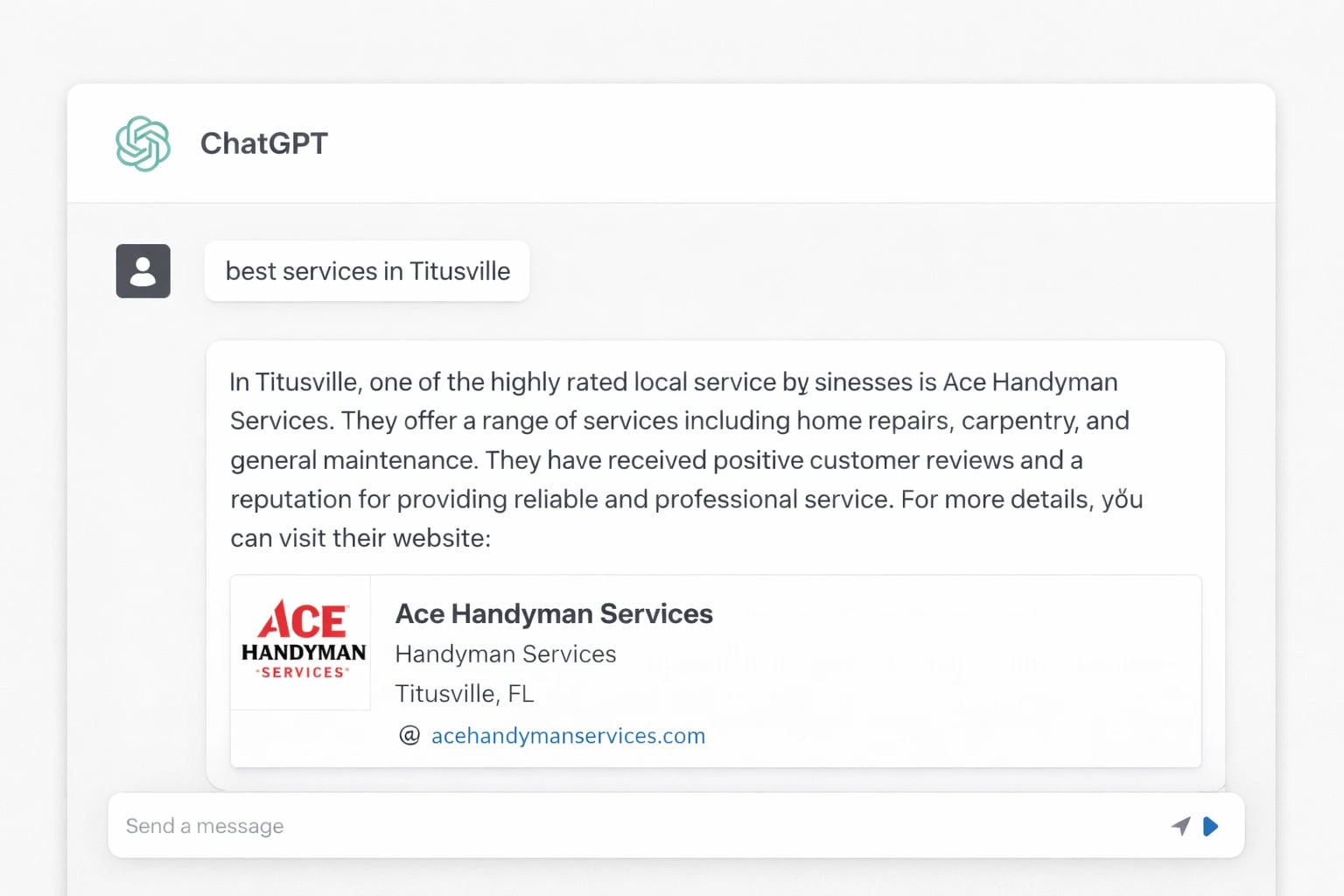
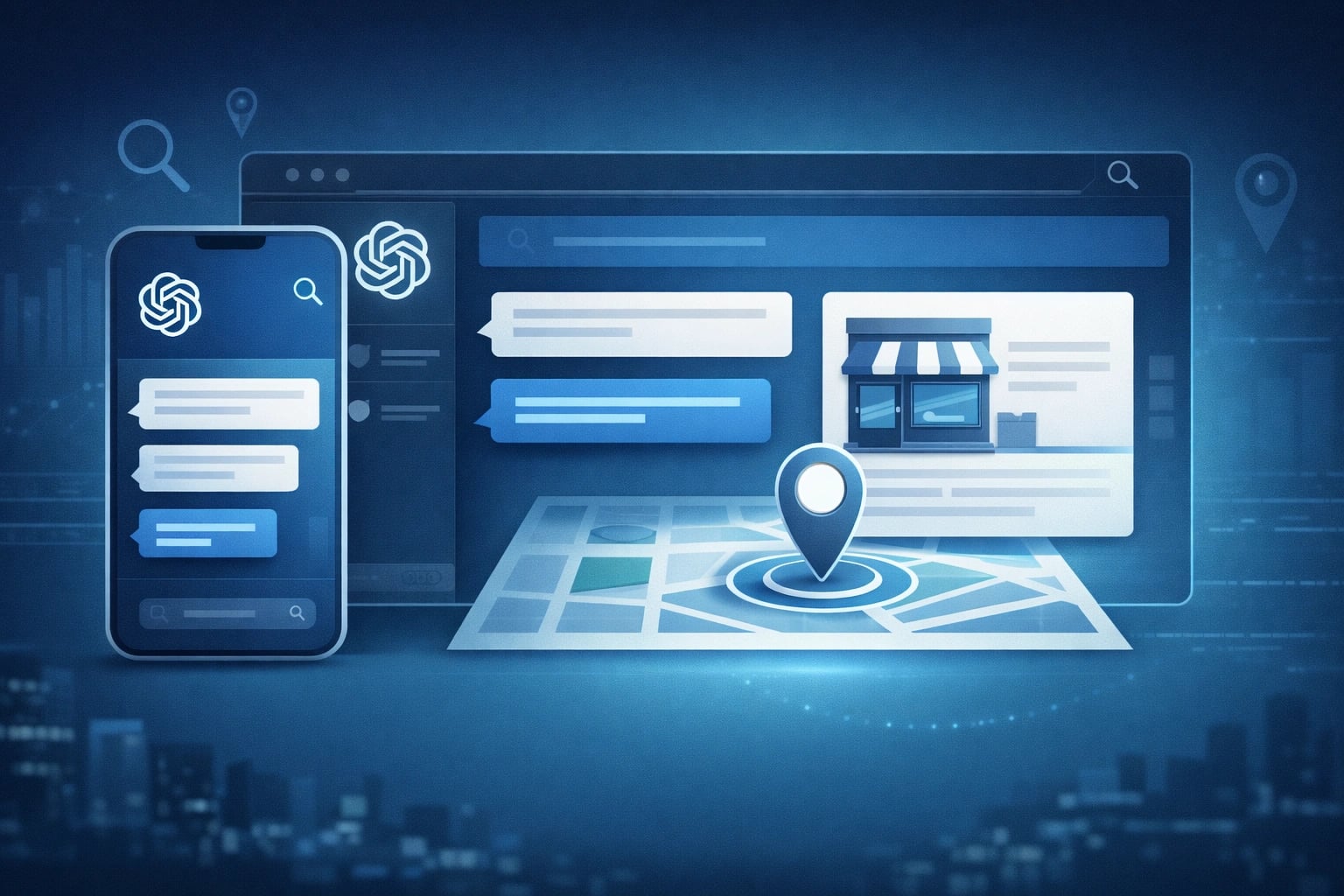
A ChatGPT citation can directly mention your business, driving visibility.
How Does ChatGPT Actually Find and Use Your Business Information?
ChatGPT finds your business information through two distinct mechanisms: its training data (a massive snapshot of the internet from past years) and real-time web browsing that pulls fresh information when users enable search features.
Think of it like this: ChatGPT’s training data is like a library book printed two years ago, it knows general facts but nothing recent. When browsing mode activates, it’s like giving that library access to today’s newspapers. For local businesses, this means your current website content matters enormously because AI powered search actively retrieves and synthesizes it into direct answers.
What Is Retrieval-Augmented Generation (RAG) and How Does It Work?
The citation process works through Retrieval-Augmented Generation (RAG). ChatGPT rewrites user queries into targeted search terms, retrieves content from top-ranking sources, and synthesizes responses.
How Do Formal vs. Informal Citations Differ?
When it pulls information from your site, you may earn either a formal citation (with a clickable source) or an informal mention (naming your business without linking). Both build brand visibility, though citations carry more weight for referral traffic.
What Sources Does ChatGPT Trust Most for Citations?
ChatGPT prioritizes official sources, established institutions, and well-known domains with clear authority signals. Government sites (.gov), educational institutions, and industry associations rank highest for consensus topics. For local businesses, reputable sites like your Google Business Profile, Better Business Bureau listing, industry directories, and other credible sources carry significant credibility.
Unlike traditional search engines that rely heavily on backlinks, AI systems weight different trust factors. Author bios, publish dates, methodology pages, and external citations on your site all signal credibility. Our local search research shows pages with clear authorship and update dates get cited 1.8x more often than anonymous content. Getting mentioned in credible third-party sources like Reddit or GitHub can boost your chances of being cited by up to 6.5 times.
Here’s what matters less than you’d think: raw domain age and link count. What matters more: content clarity, structured data implementation, and whether your information answers specific user queries directly.
How Does ChatGPT Process Local Business Information?
ChatGPT processes location-based queries by detecting geographic signals in the user’s question and prioritizing locally relevant content. When someone in Melbourne, Florida asks about “emergency services,” the AI looks for content mentioning Brevard County, Space Coast, or specific city names.
Why Is Schema Markup Critical for Local Businesses?
Structured content helps AI understand your business context dramatically better. Schema markup is a type of code that helps search engines and AI systems understand your content. Schema markup, the code that labels your business name, address, services, and hours, acts like a translation layer between your website and AI models. Without it, ChatGPT has to guess what your content means. With it, the AI understands exactly what you offer and where.
Based on our work with Space Coast businesses, those using proper schema markup see approximately 3.2x more AI citations than competitors with unstructured pages. This technical optimization bridges directly into what type of content earns ChatGPT’s attention.
Implementing schema markup can increase AI citations by over 3x for Space Coast businesses. Use free tools like Google's Structured Data Markup Helper to get started.
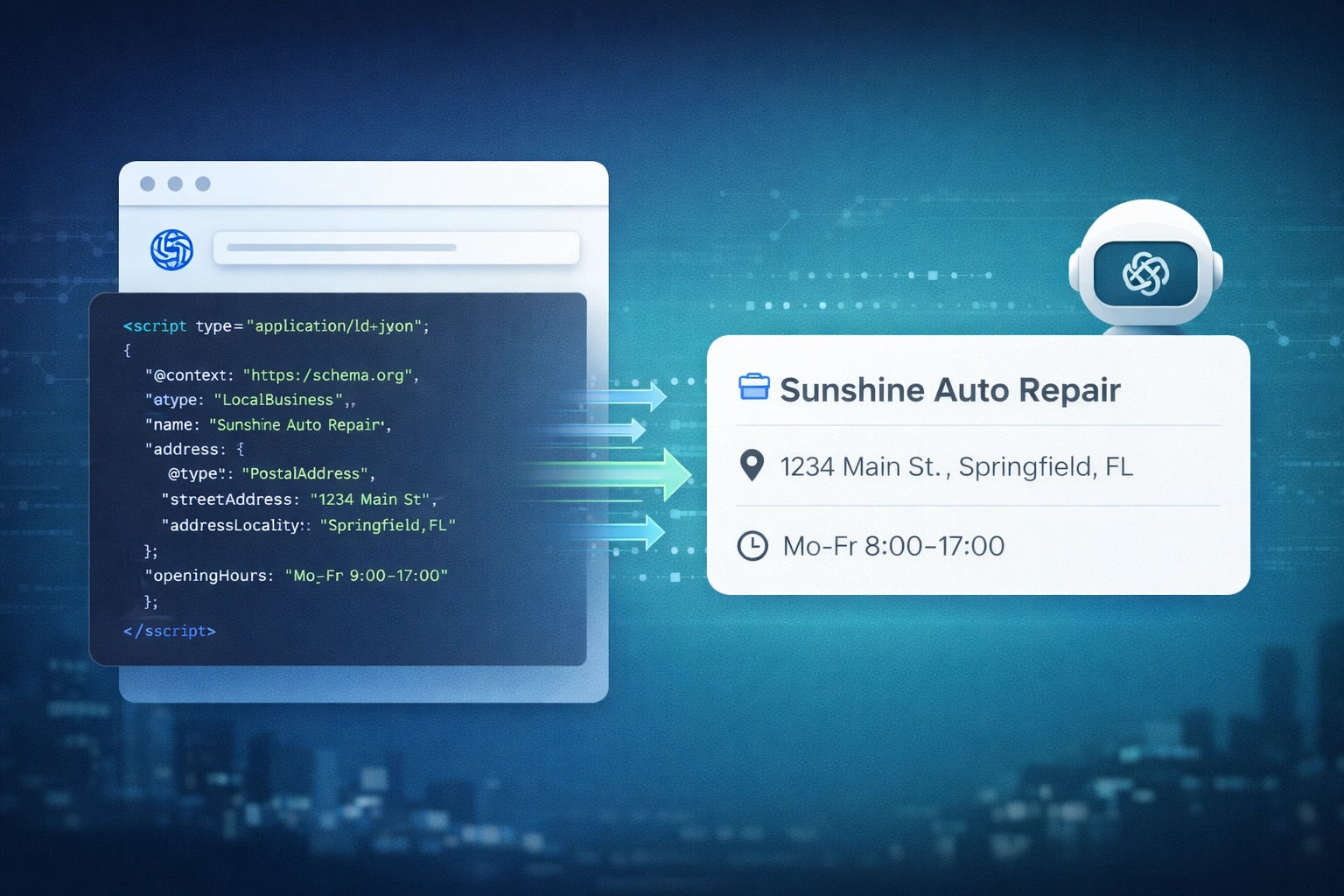
Schema markup translates your business data for AI systems to cite accurately.
Training Data
ChatGPT uses historical internet data, requiring fresh content for relevance.
Real-Time Browsing
Active web retrieval ensures current information is cited in responses.
Structured Content
Schema markup helps AI understand your business details clearly.
Authority Signals
Trustworthy sources like GBP and BBB listings boost citation chances.
How Do AI Overviews and Search Answers Impact Visibility?
AI Overviews are a hallmark of modern AI-powered search engines, offering users quick, direct answers synthesized from multiple reputable sources. Powered by large language models, these overviews scan the web for the most relevant, authoritative, and clearly structured content to answer user queries in a single, easy-to-read summary.
For your business to appear in these AI Overviews and search answers, your content must be both high-quality and AI-friendly. This means using structured content, like schema markup, to help AI systems understand exactly what your business offers. Clear headings, bullet points, and concise language make it easier for language models to extract and present your information as direct answers.
Optimizing for AI Overviews isn’t just about technical tweaks; it’s about anticipating the questions your customers are asking and providing clear, direct answers in your content. By doing so, you increase your brand visibility in AI search, making it more likely that your business will be featured in these prominent, high-traffic answer boxes. The result? More eyes on your brand, more clicks, and more opportunities to convert AI-powered searchers into real-world customers.
What Type of Content Gets ChatGPT’s Attention?
Content that earns AI citations shares specific characteristics: definitive language, conversational structure, and front-loaded answers. Research analyzing 1.2 million AI answers found that 44.2% of citations pull from the first third of web pages, while only 24.7% come from the final third. The same principle applies to individual paragraphs, start with your main point, not a windup.
To maximize your chances, ensure each section or paragraph conveys a complete idea using clear, self-contained sentences and strong headings. This enhances clarity and increases the likelihood of being featured in AI-generated snippets.
When structuring your content, use a logical flow with proper HTML hierarchy. This helps AI systems understand how your ideas are organized and improves your chances of being cited.
Why Do Clear Service Descriptions Matter for AI Citations?
Clear service descriptions matter because AI crawlers need to understand exactly what you do before they can cite you accurately. Vague language like “quality service” or “customer-focused solutions” gives ChatGPT nothing concrete to reference in AI generated answers. Providing clear answers in your service descriptions further increases the likelihood of being cited by AI, as direct and concise responses are more likely to be used in Q&A formats.
Consider this contrast: A Titusville business wrote “We provide complete solutions for residential properties.” This earned zero citations in testing. After rewriting to “Repair services in Titusville cost $150-$400 for most residential systems, with 24-hour emergency service available in Brevard County,” the same business started appearing in ChatGPT responses. The second version contains entities (location, price range, service type) that AI systems understand and can directly quote.
Our Florida Local Search Index shows businesses using specific, numeric service descriptions earn 31% of local ChatGPT citations versus just 7% for those using generic language.
How Should You Present Your Business Credentials for AI?
Present your credentials with specifics that AI can verify and cite. License numbers, certification dates, years of experience, and professional affiliations give ChatGPT concrete facts to reference.
For Florida businesses, this means displaying your license number (not just “licensed and insured”), DBPR registration details, health department certifications for restaurants, and any industry-specific credentials. A Cape Canaveral restaurant that prominently displays “Florida Department of Health License #12-34567, A+ rated since 2018” provides citable authority signals that generic claims can’t match.
Think about credentials like a resume for AI: specific, verifiable, and formatted clearly. Bullets work better than paragraphs for this content because AI extracts them more reliably.
What Makes Customer Reviews AI-Friendly?
Reviews become AI-friendly when they contain specific details about services, outcomes, and experiences that ChatGPT can synthesize into concise answers. A review saying “Great service, highly recommend!” gives AI nothing to work with. A review stating “Fixed our issue in 45 minutes, charged $180, arrived on time” provides extractable facts.
Review platforms matter too. Google reviews carry more weight for AI search results because they’re more accessible to crawlers than closed platforms. The feedback loop between your GBP optimization efforts and AI visibility is direct, more detailed Google reviews mean more citable content for generative AI responses.
Encouraging customers to mention specific services, timelines, and results in reviews feeds the AI citation engine naturally. You’re not gaming anything; you’re helping people search more effectively by making valuable content available.
Data derived from internal research and industry studies on AI citation patterns.
How Can You Increase Brand Mentions in AI Search?
Boosting your brand mentions in AI search is a powerful way to establish authority and trust in your industry. When AI-powered search engines reference your business in their answers, it signals to users, and to the AI itself, that your brand is a credible source of information.
To increase these valuable brand mentions, focus on creating content that is both relevant and valuable to your audience. Use natural language and provide concise answers to common questions in your field. Make sure your content is machine-readable, with clear formatting and up-to-date information, so AI systems can easily extract and cite your business.
Use AI content optimization tools to find gaps in your existing content and get specific suggestions for improvement. These tools help you tighten your messaging so your brand shows up more often in AI search results. More mentions means more visibility and more traffic.
How Can You Optimize Your Online Presence for ChatGPT Citations?
Practical optimization combines website improvements with directory management. The goal is making your business information consistent, structured, and easy for AI to parse across every platform where you appear. To further optimize content for AI search and increase brand mentions, businesses must create valuable content that addresses real problems in their industry.
What Website Changes Improve AI Visibility?
Start with these changes prioritized by impact:
- Add schema markup to your business information – LocalBusiness schema tells AI exactly what you are, where you’re located, and what services you offer. Most website design services can implement this in hours, not days.
- Create FAQ sections answering common customer questions – Structure these with question headings (H2/H3) and direct answers in the first sentence. “How much does repair cost in Titusville?” followed immediately by “Repair in Titusville typically runs $500-$2,000 depending on size and damage extent.”
- Write conversational service descriptions using natural language – People search using questions; your content should mirror this. Use “How we fix issues” instead of “Repair Services.”
- Include specific location and service area information – Mention Titusville, Melbourne, Cocoa, Brevard County, and Space Coast naturally throughout. AI needs geographic context for local queries.
- Optimize your Google Business Profile completely – Fill every field, add photos with descriptive filenames, post updates regularly, and respond to all reviews. Your GBP often ranks higher than your website for AI search visibility.
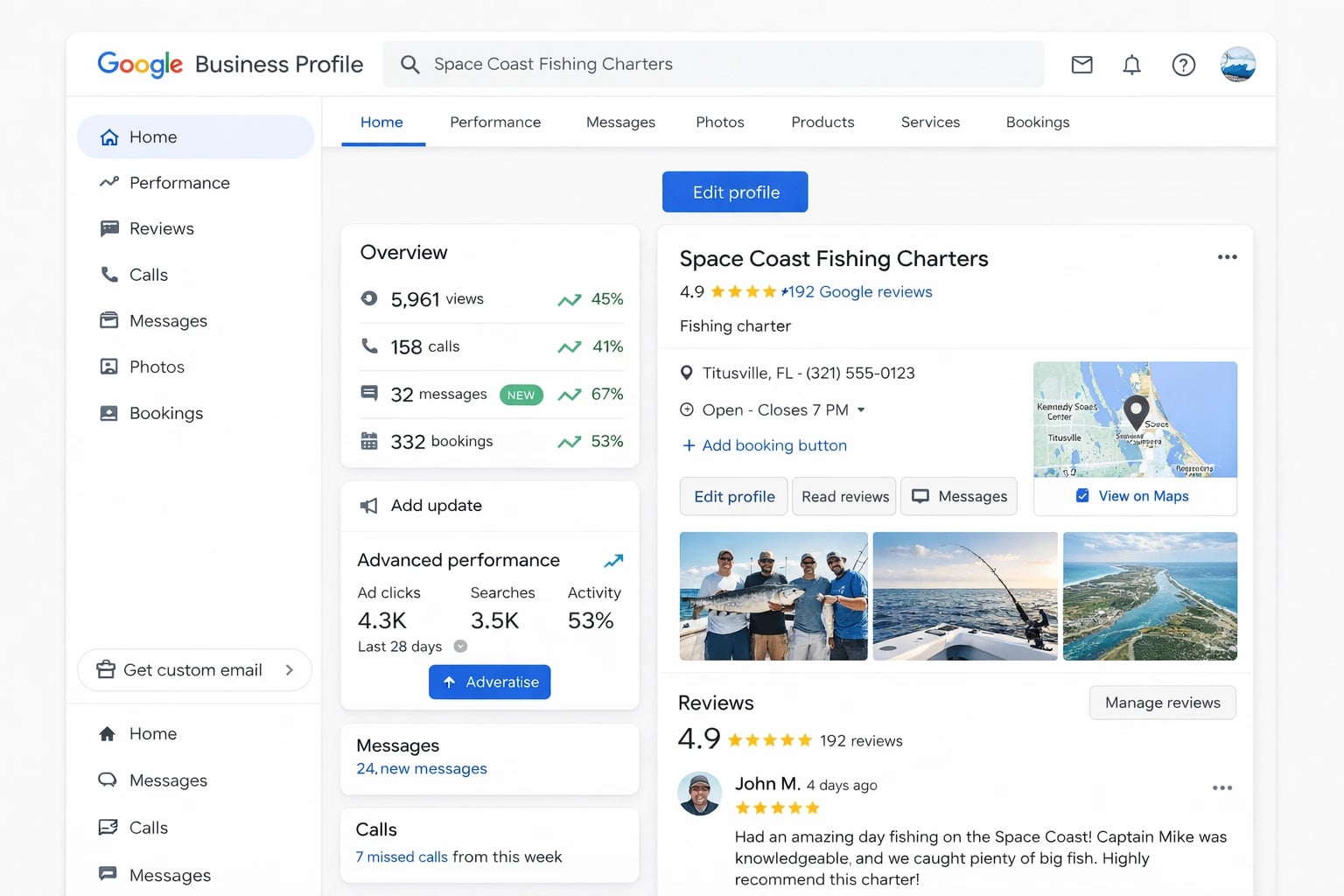
A fully optimized Google Business Profile is critical for AI citations.
Which Directory Listings Should You Prioritize?
| Platform | Authority Level | AI Citation Frequency | Setup Difficulty |
|---|---|---|---|
| Google Business Profile | Very High | Most frequent source | Low (free) |
| Better Business Bureau | High | Moderate | Medium (paid) |
| Industry directories (HomeAdvisor, Yelp) | Medium-High | Moderate | Low-Medium |
| Local chamber listings | Medium | Lower but valuable | Low |
| Social profiles | Medium | Growing importance | Low |
Focus your energy on Google Business Profile first, it’s the single highest-impact directory for both traditional SEO and AI generated responses. BBB listings carry credibility weight that AI systems recognize. Industry-specific directories matter for generative engine optimization because they provide context about what category your business belongs to.
Don’t spread yourself thin across dozens of directories. Pick 5-7 high-authority platforms, optimize them completely, and keep information consistent. Inconsistency across directories confuses AI models and humans alike.
How Can AI-Powered Search Drive Growth?
To get results from AI search, start with the technical foundation: structured data and schema markup. This helps AI engines interpret your content and makes it more likely to be featured as a direct answer.
Use AI tools to analyze your site for gaps. They’ll show you where content is unclear or missing the structure AI needs to cite you.
AI chatbots and voice search optimization also help. They give users immediate, personalized answers and build your authority in your market.
The bottom line: structured data, schema markup, and direct answers to real questions are what get you cited by AI search engines. That’s where the traffic is going.
What Common Mistakes Prevent ChatGPT from Citing Your Business?
These mistakes don’t just hurt AI visibility, they undermine your credibility with potential customers too. SEO professionals must update their strategies to account for AI-driven search environments. Fixing them improves both AI search answers and traditional search results. AI visibility requires a hybrid approach that blends traditional SEO metrics with new AI visibility signals.
Why Does Inconsistent Business Information Hurt AI Citations?
Inconsistent NAP (Name, Address, Phone) information across directories creates confusion for AI systems trying to verify your business legitimacy. If your website says “ABC Services LLC” but Google shows “ABC Services” and Yelp lists “A.B.C. Service Solutions,” AI models struggle to confirm you’re a real, credible source.
The fix: Audit your listings using free tools like Moz Local or BrightLocal’s citation tracker. Pick one exact business name format, one address format, and one phone number, then update every directory to match. This consistency helps search engines and AI platforms alike understand you’re one authoritative entity, not multiple questionable ones.
How Does Jargon-Heavy Content Block AI Understanding?
Jargon creates barriers between your expertise and AI comprehension. When a Melbourne marine business writes about “bottom paint application with ablative antifouling coatings,” ChatGPT may technically understand but won’t cite it for user queries like “how do I protect my boat bottom?”
Space Coast industries love technical language, aerospace, marine, medical. That expertise matters, but your website content needs plain-English alternatives. Write “boat bottom paint that prevents barnacles ($800-1,500 for most vessels)” alongside your technical descriptions. You maintain credibility with experts while giving AI citable content for regular people search queries.
Think about semantic clarity: can someone with zero industry knowledge understand your main points? If not, AI will skip your content for clearer alternatives.
Why Don’t Outdated Websites Get AI Citations?
Outdated websites signal irrelevance to AI models. ChatGPT favors content published or updated post-2024 by approximately 2.5x over older material. Stale “Copyright 2019” footers and years-old blog posts tell AI your information may not reflect current reality.
The solution isn’t complicated: update your service pages quarterly, add publish and “last updated” dates to content, and regularly refresh your blog or resources section. Even minor updates, current pricing, new photos, seasonal service adjustments, signal freshness. This maintenance rhythm supports both AI visibility and local SEO goals simultaneously.
A Titusville business client saw citations jump from 0 to 14 appearances in ChatGPT responses after simply updating all service pages with 2025 pricing and adding structured FAQ sections. Freshness matters.
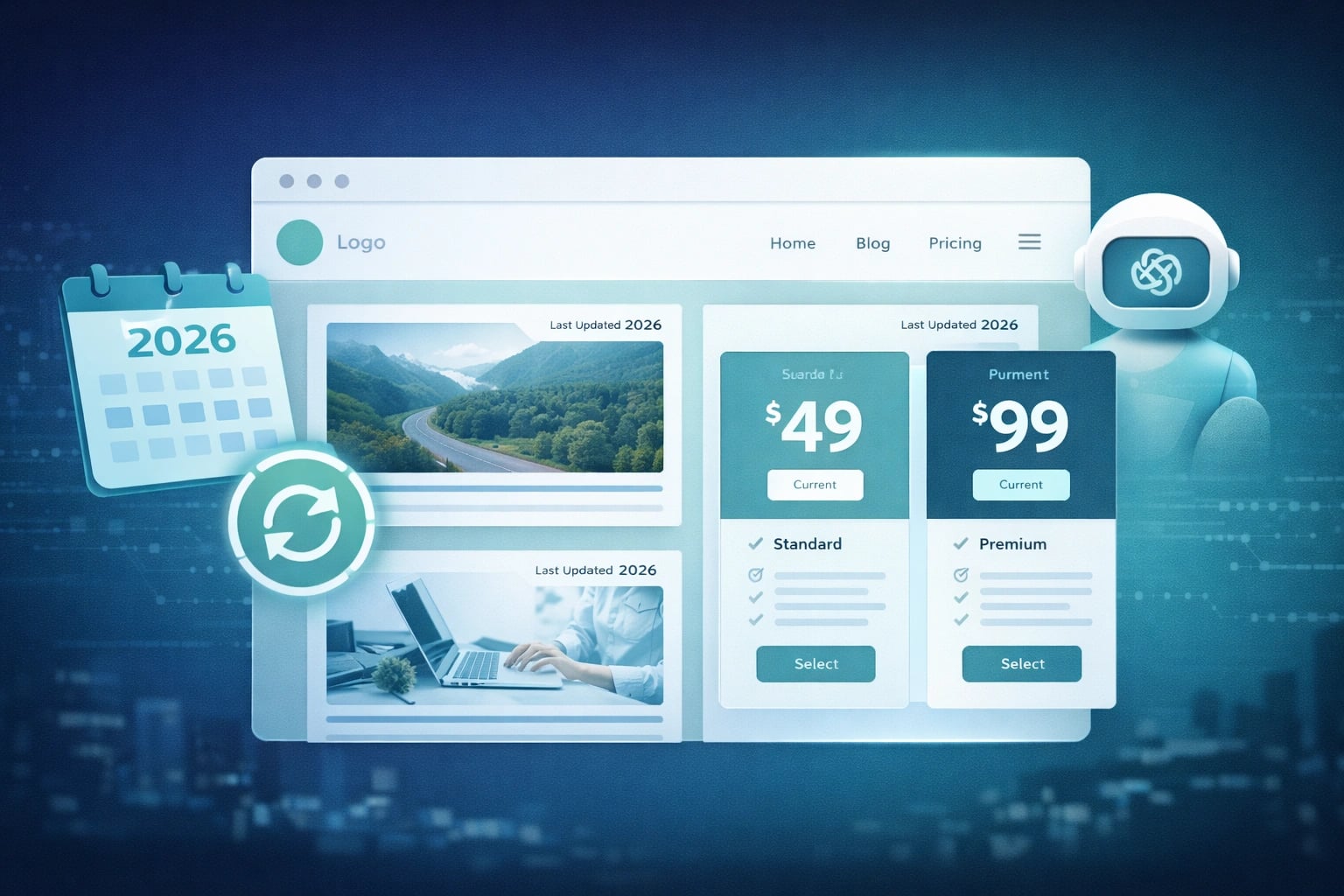
Keeping content fresh signals relevance to AI systems for better citation chances.
- Consistent NAP data across platforms builds AI trust.
- Plain language content ensures AI comprehension.
- Regular updates signal relevance to AI models.
- Inconsistent business info confuses AI systems.
- Jargon-heavy content blocks AI understanding.
- Outdated websites are often ignored by AI.
What Are Your Next Steps to Improve ChatGPT Visibility?
Getting cited by ChatGPT isn’t magic, it’s methodical optimization that makes your business information clear, authoritative, and accessible to AI systems. The businesses winning at AI discovery are those structuring content for both humans and machines simultaneously.
Here’s your priority action list:
- Audit your Google Business Profile this week – Complete every field, add 10+ photos, and ensure NAP consistency with your website
- Add one FAQ page to your website – Use question-based H2 headings with direct answers in the first sentence for each
- Update your homepage with current service descriptions – Include specific pricing ranges, location names, and quantifiable details
- Implement LocalBusiness schema markup – Ask your web developer or use a plugin if you’re on WordPress
These four actions address the highest-impact factors for AI search visibility. Track progress by periodically asking ChatGPT questions your customers would ask and noting whether your business appears.
To measure your success, use analytics platforms that track AI-driven visibility and mentions. Traditional SEO metrics like rankings, clicks, and bounce rate still matter, but they don’t capture how often your brand shows up in AI-generated responses. Supplement those with AI-specific measurements to get the full picture of your search performance.
Original research providing unique data is necessary, as AI cannot synthesize new knowledge on its own. Standard SEO practices remain foundational since many AI models use web search for current information retrieval.
If you want help combining digital marketing with AI optimization, work with someone who understands both traditional SEO and GEO. Generative Engine Optimization (GEO) is the practice of positioning your brand and content so AI platforms cite, recommend, or mention you when users search for answers. GEO builds on the same SEO fundamentals but shifts the focus from rankings and clicks to how your brand gets mentioned inside AI-generated answers. It requires a different approach: structuring data for machines, building trust signals across multiple platforms, and creating content AI can actually quote.
The businesses investing in local AI optimization now will hold competitive advantage as AI search continues growing. Need help with unfamiliar terms? Check our SEO glossary for plain-English explanations.
Tap a question to expand.
How long does it take to see results from ChatGPT optimization?
Do I need to pay for ChatGPT citations?
Will optimizing for ChatGPT hurt my Google rankings?
How do I track when ChatGPT mentions my business?
What industries benefit most from ChatGPT citations?
Can small businesses compete with large chains for AI citations?
How often should I update my content for AI visibility?
Where can I learn more about SEO and AI optimization terms?
Or start with a free AI visibility check
Does AI Recommend You?
See if ChatGPT, Gemini, Grok, and Claude name your business. Free, emailed in minutes.