

Keyword Research for AI Search
Learn how to research conversational queries and entity-based intent to get cited by ChatGPT, Perplexity, Claude, and other AI engines in 2026.
Updated July 16, 2026 · 12 min read
Table of Contents
• Traditional short keywords miss most AI-driven queries • Focus on full conversational questions and clear entities • Different AI platforms favor distinct sources and formats • Structure content with direct answers, lists, and FAQ sections
TL;DR: Traditional keyword lists miss most AI queries. Focus on full conversational questions and clear entities instead. Different AI platforms pull from distinct sources like Wikipedia for ChatGPT, Reddit for Perplexity, and structured pages for Claude. Build content that answers real prompts directly with strong authority signals and FAQ sections to increase citation chances across engines.
Small and mid-size business owners now face a different discovery problem. People no longer type short phrases into Google. They ask full questions to ChatGPT, Perplexity, Claude, and Gemini. If your site does not match those exact conversational patterns or clarify the entities involved, AI engines simply skip you.
Old keyword tools still show volume for head terms. They rarely reveal the 20-word questions real users type or the specific people, places, and concepts those questions reference. The result is content that ranks in classic search but stays invisible where buying decisions now happen.
This post shows a practical way to research the queries that matter for AI visibility. It draws from current platform behaviors and focuses on what actually moves the needle for citation in 2026.
Traditional Keywords Miss AI Intent
Search volume numbers still matter for some traffic. They do not capture how people phrase questions to large language models. A 2026 analysis of millions of AI citations found average user prompts run 20-plus words long. Short keywords rarely appear in those full sentences.
AI engines treat the entire prompt as context. They look for direct answers, clear definitions, and consistent references to the same entities. A page optimized only for "digital marketing" will lose to one that explicitly answers "How does a small manufacturer in the Midwest choose a digital marketing agency for lead generation in 2026?"
The shift requires new research habits. Start by collecting the actual questions your customers type into AI tools. Then map the key entities those questions mention.

Conversational queries often exceed 20 words and reference specific entities.
Research Conversational Queries
Begin with the questions already appearing in your analytics or support logs. Add variations that include context like location, industry, timeline, or outcome. Perplexity, for example, heavily favors real-time community sources and definitive opening paragraphs. Content that leads with a clear answer followed by supporting points earns more citations there.
Test prompts yourself in each major engine. Note which sources appear and how they structure answers. ChatGPT often pulls from Wikipedia and established authority sites for factual queries. Claude rewards pages with clean bullet lists and technical depth.
Compile a living list of these full questions. Group them by topic cluster. This list becomes your primary targeting document instead of a classic keyword spreadsheet.
Map Entity-Based Intent
Every strong AI query references specific entities. These can be people, companies, products, processes, or locations. Engines perform better when your content consistently identifies and connects those entities.
For a digital marketing agency, relevant entities include the agency name, service types, client industries, and comparison points like traditional SEO versus AI visibility work. Clear entity signals help models understand exactly what your page covers and when to cite it.
Use consistent naming across pages. Add short definitional sections for key terms. This practice improves both human clarity and machine parsing without extra schema tricks.

Clear entity mapping helps AI engines understand exactly what your content covers.
Practical Research Workflow
Run your core topics through AI chat interfaces daily. Save the questions that produce useful or competitor-heavy answers. Cross-reference with People Also Ask data and related searches from traditional tools.
Review competitor pages that already earn citations. Note their opening structure, use of lists, and how they define entities. Replicate the helpful patterns while adding your own data or examples.
Update the list quarterly. AI engines weight recency differently. Perplexity in particular rewards fresher sources on time-sensitive topics.
Content Structure That Wins Citations
Lead with the direct answer in plain language. Follow with supporting sections that use short paragraphs and bullet lists. Claude shows stronger preference for this format.
Include a dedicated FAQ block that mirrors real conversational queries. Standard FAQPage schema helps machines extract these pairs cleanly. Many 2026 reports note higher citation rates for pages that present answers in scannable, question-answer format.
Add concrete examples and original observations. Authority and originality remain top factors for ChatGPT selections. Generic summaries rarely earn links or mentions.
Platform Differences to Respect
ChatGPT tends to cite established reference material and branded domains more often. Perplexity pulls heavily from Reddit threads and official documentation with explicit numbered citations. Claude favors structured, helpful explanations that align with its emphasis on accuracy.
No single page needs to win every engine at once. Create core content that covers the main entities and questions. Then layer platform-specific tweaks such as extra depth for Claude or fresher data points for Perplexity.
Track which engines actually send visitors. Focus optimization effort on the platforms that matter most for your audience.
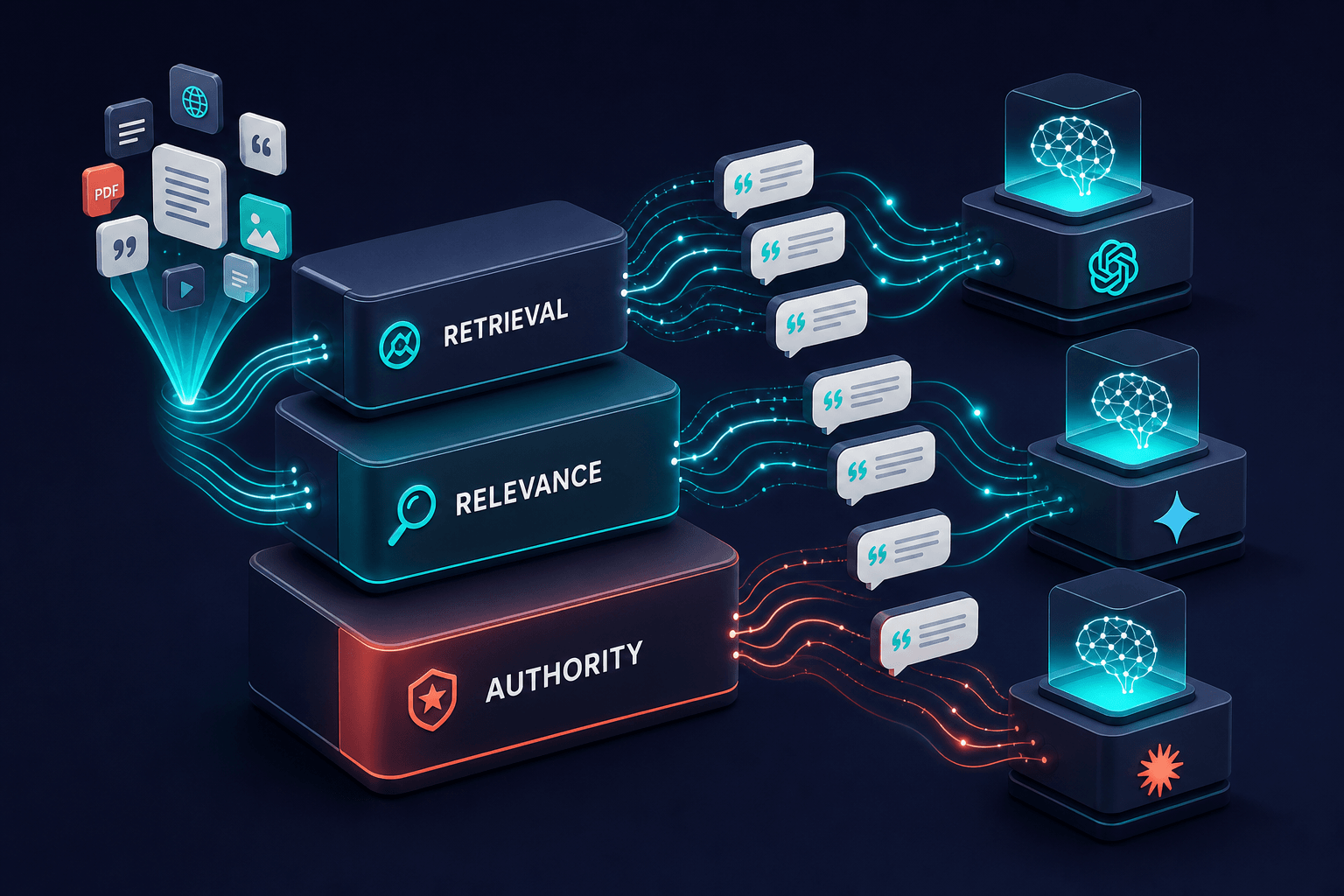
Each AI engine draws from different sources and rewards specific content formats.
Measure What Matters
Track brand mentions and direct citations inside AI answers. Several free and paid monitors now surface this data across ChatGPT, Perplexity, and Gemini.
Watch referral traffic from AI domains. Note which specific questions drive visits. Compare citation frequency before and after content updates.
Success looks different from classic rankings. A single strong citation on Perplexity can deliver more qualified leads than ranking tenth on Google for a broad term.
Fewer than 10 percent of sources cited by major AI engines rank in the top 10 Google results for the same query. Classic SEO alone does not guarantee AI visibility.
Key Takeaways
- Collect full conversational questions from support logs, AI tests, and related search features instead of relying only on short keyword volume.
- Identify the key entities in those questions and define them consistently across your site.
- Structure answers with direct leads, short paragraphs, bullets, and FAQ sections that match real user phrasing.
- Respect platform differences: Wikipedia-style authority for ChatGPT, community freshness for Perplexity, and structured depth for Claude.
- Measure citations and AI-driven referrals directly rather than traditional rankings alone.
FAQ
Do I still need traditional keyword research?
Yes for some traffic channels. Add a second layer focused on conversational questions and entities. The two approaches complement each other for different discovery surfaces.
How often should I update AI-targeted content?
Review quarterly for most topics. Refresh faster for time-sensitive subjects because Perplexity and similar engines weight recency heavily.
What schema actually helps with AI citations?
Standard FAQPage, Article, and Organization schema improve machine readability. No special new AI-only schema is required according to current platform guidance.
Can a small team do this without expensive tools?
Start with free AI chats, your own analytics, and manual prompt testing. Paid monitors become useful once you have baseline content in place.