


SEO Techniques for Local Businesses | Florida
SEO techniques that work for local businesses: landing page optimization, Google Business Profile, structured data, and the technical fixes worth doing first.
Updated January 26, 2026 · 16 min read
Table of Contents
Local businesses need effective SEO to compete online. The right techniques can boost your visibility, attract qualified leads, and drive more sales.
Many business owners struggle with low search rankings and weak lead generation. The good news? These challenges can become growth opportunities with the right approach.
Here are the essential SEO strategies that work for local businesses like yours:
- Optimizing landing pages for conversions
- Using Google Business Profile effectively
- Using AI-powered SEO tools
- Improving technical performance
What Are the Most Effective SEO Strategies to Increase Website Traffic?
The most effective SEO strategies to increase website traffic include:
- Optimizing Landing Pages: Create high-converting landing pages with clear business descriptions, detailed service offerings, and strong calls-to-action. Ensure they are optimized for local searches using relevant local terms in meta descriptions and title tags.
- Using Google Business Profile: Regularly update your Google Business Profile, respond to reviews, and ensure all details are accurate to improve visibility in local search results and on Google Maps.
- Using AI-Powered SEO Tools: Use AI tools to automate tasks, track progress, and identify areas for improvement in your local SEO efforts.
- Participating in Local Events: Host or participate in local events to increase brand visibility and create event-specific landing pages optimized for local searches.
- Promoting via Google Posts: Use Google Posts to promote events and offers, enhancing visibility in local search results.
- Offering Exclusive Discounts: Provide special promotions to attract new customers and encourage engagement.
These strategies can help drive targeted traffic and improve conversion rates.
L3ad Solutions specializes in helping local businesses implement these strategies effectively. By focusing on website design and local SEO optimization, L3ad Solutions ensures that your business stands out in search results, attracting more qualified leads.
Consistency in updating your Google Business Profile can significantly boost your local search visibility.
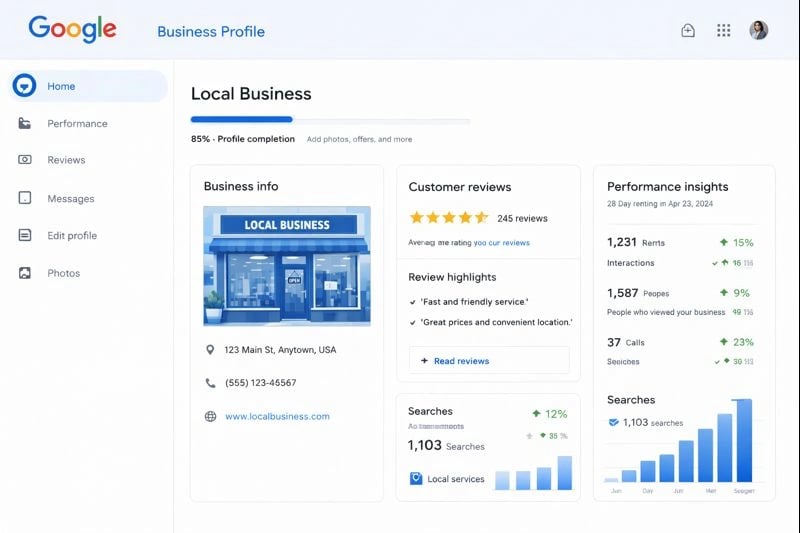
A well-optimized Google Business Profile can significantly improve your local search visibility.
How Does Local SEO Optimization Drive Targeted Traffic?
Local SEO helps nearby customers find your business. When someone searches "plumber near me" or "restaurant in Titusville," local SEO determines if you show up. For a complete guide to dominating local search, see our Florida local SEO strategies.
How it works:
- Optimizing your Google Business Profile
- Using location-specific keywords
- Keeping business information accurate across the web
The result? More local customers actively searching for your services. And unlike paid ads, local SEO brings organic traffic without ongoing costs. Our local SEO services are designed to help businesses capture this valuable traffic. For a step-by-step walkthrough, see our complete local SEO guide.
Increased Visibility
Appear in local search results and Google Maps to reach nearby customers.
Cost-Effective Marketing
Attract organic traffic without the recurring costs of paid ads.
Higher Conversion Rates
Target customers actively searching for your services in your area.
Which On-Page SEO Techniques Improve User Experience and Rankings?
On-page SEO techniques that improve user experience and rankings include:
- Speed Optimization: Aim for website load times under 3 seconds by compressing images and enabling caching.
- Clear Headings and Keywords: Use descriptive H1 tags and incorporate natural keywords relevant to your services.
- Mobile-Friendly Design: Ensure your website is responsive, as a significant portion of local searches are conducted on mobile devices.
- Schema Markup: Implement local business schema to enhance search results with rich snippets.
- Optimized Landing Pages: Create landing pages with clear business descriptions, service offerings, and strong calls-to-action.
- Tracking Performance: Use SEO tools to monitor metrics like conversion rates and bounce rates to continually improve your strategy.
These techniques help reduce bounce rates, improve visibility in search results, and enhance overall user experience.
- Optimize website speed to under 3 seconds with image compression and caching.
- Use clear, descriptive headings and natural keywords for better relevance.
- Ensure mobile-friendly design to cater to the majority of local searches.
- Implement schema markup for rich snippets in search results.
How Can Technical SEO Best Practices Enhance Website Performance?
Technical SEO helps search engines understand and rank your website. Here's what matters most:
- Schema markup tells Google what your business does
- Structured data highlights key information like hours and location
- Fast load times keep visitors on your site
- Mobile optimization ensures a good experience on phones
When these elements work together, your site ranks higher and converts better.
What Are Core Web Vitals and Why Do They Matter?
Core Web Vitals measure how users experience your website. Google uses these metrics to rank sites:
- Loading speed – How fast your main content appears
- Interactivity – How quickly buttons and links respond
- Visual stability – Whether elements jump around while loading
Sites that score well on these metrics rank higher. Google rewards good user experience.
Improving Core Web Vitals not only enhances user experience but also boosts your search engine rankings.
How to Optimize Website Speed and Mobile-First Design?
- Speed Optimization: Aim for website load times under 3 seconds. This can be achieved by compressing images and enabling caching.
- Mobile-Friendly Design: Ensure your website is responsive, as over 60% of local searches are conducted on mobile devices. Check that essential buttons, like "Call Us," are large and easy to tap.
- On-Page SEO: Use clear headings and incorporate location-specific keywords in titles and meta descriptions to improve visibility and relevance.
- Regular Performance Monitoring: Use tools like Google PageSpeed Insights to identify and fix issues affecting speed and performance.
By focusing on these areas, you can enhance both the speed and mobile usability of your website, leading to better user experience and higher conversion rates.
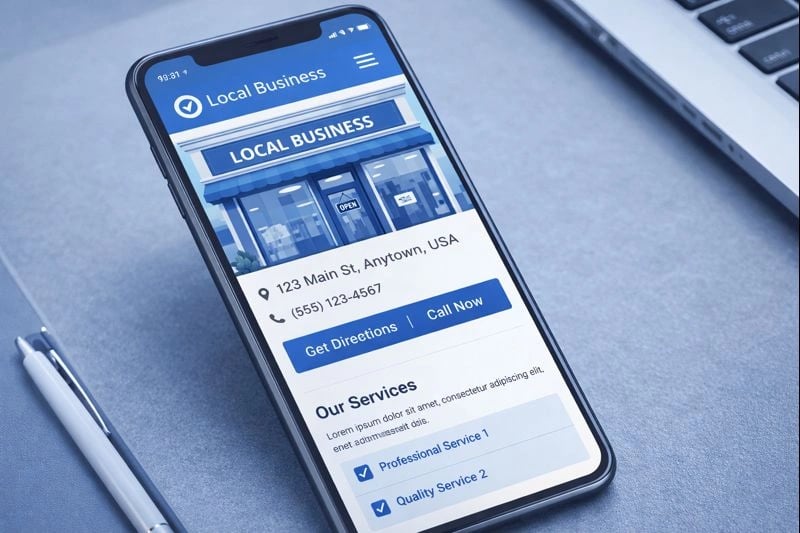
Mobile-first design is critical for engaging users and improving search rankings.
What Local SEO Optimization Techniques Dominate 'Near Me' Searches?
- Optimizing Google Business Profile: Ensuring accurate and up-to-date business information, including address, phone number, and business hours.
- High-Quality Photos: Uploading appealing images to attract potential customers.
- Customer Reviews: Encouraging and responding to positive reviews to enhance visibility and credibility.
- Location-Specific Keywords: Incorporating relevant local keywords into website content to improve search rankings.
- Local Citations: Building high-quality local citations to increase online presence.
- Using Google Maps: Using Google Maps to improve visibility and attract customers searching for services nearby.
These techniques help businesses appear in local search results and drive more foot traffic.
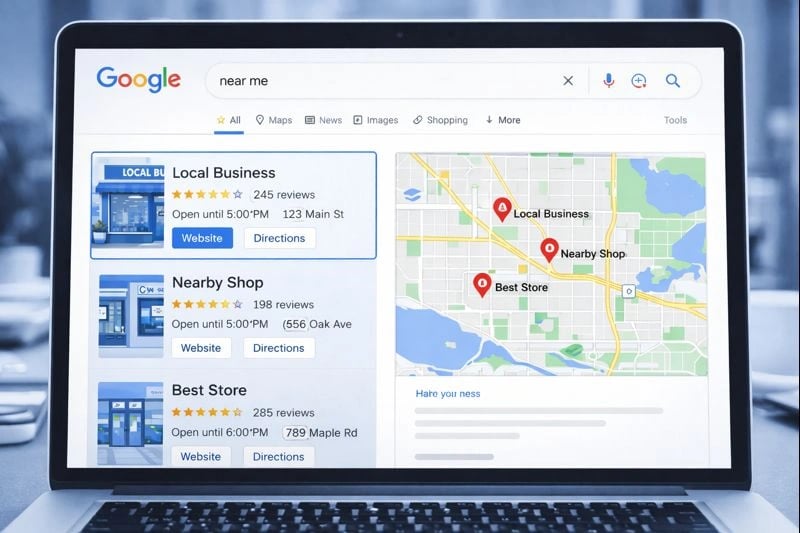
Optimizing for 'near me' searches can significantly increase local foot traffic.
Google Business Profile
Keep your profile updated with accurate business details.
Local Keywords
Incorporate location-specific terms into your content.
Customer Reviews
Encourage and respond to reviews to build credibility.
How to Optimize Your Google Business Profile for Maximum Visibility?
- Claim and Verify Your Profile: Ensure your profile is claimed and verified to open up full features.
- Add Accurate Business Information: Include your business hours, address, and phone number, and keep them updated.
- Choose Accurate Categories: Select primary and secondary categories that match your services.
- Fill Out Services Completely: List specific services to match user intent.
- Upload High-Quality Photos: Regularly add fresh, high-quality images to showcase your business.
- Respond to Reviews: Engage with customer feedback promptly to build trust and credibility.
- Post Regular Updates: Share updates and offers to keep your business top of mind for customers.
- Ensure NAP Consistency: Maintain consistent Name, Address, and Phone number across all online platforms.
Why Are Local Citations and NAP Consistency Critical?
NAP stands for Name, Address, and Phone number. Google checks if this info matches across the web.
Why it matters:
- Mismatches confuse Google and hurt rankings
- Inconsistent info makes customers doubt your legitimacy
- Accurate NAP builds trust and improves local visibility
Keep your business name, address, and phone number identical everywhere it appears online.
How Does AI Enhance SEO and Lead Generation for Websites?
AI makes SEO faster and smarter. Here's what AI tools can do for your business:
- Automate technical tasks like schema markup and structured data
- Analyze data to find improvement opportunities
- Monitor reviews and manage your online reputation
- Research keywords to find what customers actually search for
- Create content that answers real customer questions
The result? Better leads, less manual work, and more competitive rankings.
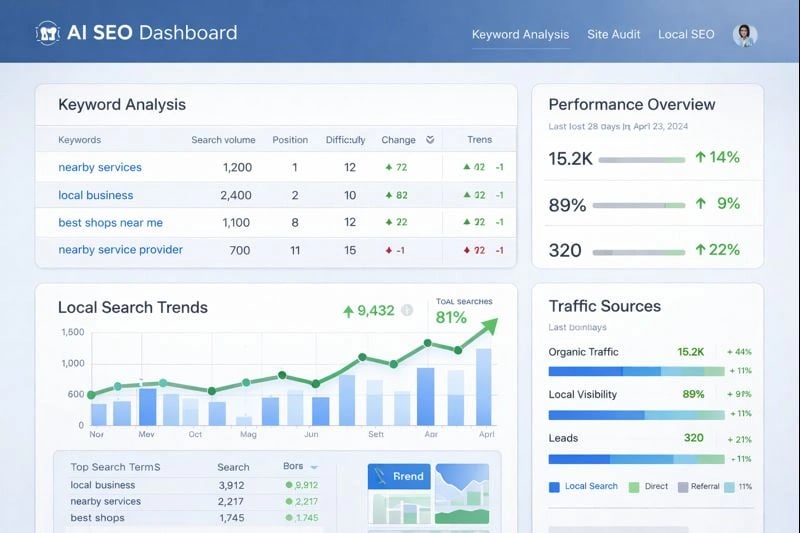
AI tools can simplify SEO tasks and uncover valuable insights for local businesses.
- Automates technical SEO tasks like schema markup for efficiency.
- Analyzes data to uncover trending local keywords for targeting.
- Simplifies reputation management by monitoring reviews.
- Creates targeted content aligned with customer search intent.
What AI-Driven SEO Tools Improve Keyword Research and Content Creation?
- AI for Keyword Research: These tools help identify trending local terms, service + location phrases, and predict seasonal demand shifts, ensuring businesses target keywords that drive calls.
- AI for Content Generation: AI tools assist in creating content that answers customer questions clearly, builds local service pages, and optimizes for AI-powered search results.
- AI-Powered SEO Tools: Tools like Paige automate features for optimizing online presence and improving search engine rankings, analyzing data, and providing recommendations.
- AI for Technical SEO: Automates tasks like schema markup and structured data implementation, enhancing how search engines understand websites.
These tools collectively simplify the processes of keyword research and content creation, making them more efficient and effective for businesses.
How Can AI-Powered Lead Tracking Boost Conversion Rates?
AI lead tracking improves both lead quality and quantity. Here's why it works:
- Organic leads are more credible and ready to buy
- AI helps you reach customers at the right moment
- You own your customer data for future marketing
Real results: One business increased leads by 25% and cut cost-per-lead to under $20 using AI-driven SEO.
What Are the Best Website Design Practices to Support SEO and Conversions?
- Clear Business Description: Ensure your landing pages have a concise and informative description of your business.
- Detailed Service Offerings: Provide complete details about the services you offer.
- Strong Call-to-Action: Include a visible and compelling call-to-action that guides visitors toward the next step, such as booking an appointment or filling out a form.
- Local SEO Optimization: Use relevant local terms in meta descriptions, title tags, and content. Implement structured data to help search engines understand your business details.
- Mobile Optimization: Ensure your website is mobile-friendly, with fast loading times and easily accessible buttons, especially for emergency services.
- Tracking Performance: Use SEO tools to monitor metrics like conversion rates and bounce rates to refine your approach.
- Event-Specific Landing Pages: Create and optimize landing pages for local events to enhance visibility and engagement.
- Promotions and Discounts: Offer exclusive discounts to attract new customers and encourage service trials.
By focusing on these practices, you can improve both your SEO and conversion rates effectively.
A clear call-to-action on every landing page can significantly increase conversion rates.
How Does Mobile-First Design Influence Search Rankings and User Engagement?
Over 60% of local searches happen on phones. If your site doesn't work well on mobile, you're losing customers.
What mobile-first means:
- Fast load times (under 3 seconds)
- Easy-to-tap buttons and links
- Content that's readable without zooming
- Simple navigation with one hand
Google ranks mobile-friendly sites higher. Users stay longer and convert more often.
What Conversion Rate Optimization Techniques Increase Leads?
- Optimizing Landing Pages: Ensure landing pages have a clear business description, detailed service offerings, and a strong call-to-action.
- Local SEO Optimization: Use relevant local terms in meta descriptions, title tags, and content, and implement structured data to improve search visibility.
- Tracking Performance: Use SEO tools to monitor metrics like conversion rates and lead sources to refine strategies.
- AI-Powered Local SEO: Use AI tools to predict search trends and optimize content accordingly, enhancing visibility and engagement.
- Adaptive Web Design: Tailor website content based on user behavior and device to maximize conversions.
- Exclusive Leads: Focus on generating leads through your own website to avoid competition and bidding wars.
- Promoting via Google Posts: Use Google Posts to engage with potential customers directly.
These strategies can significantly enhance lead generation for local businesses.
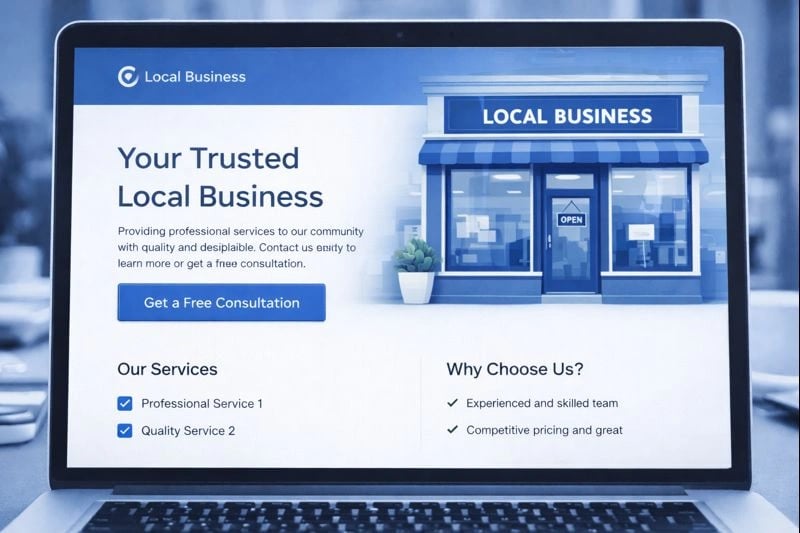
Effective landing pages are key to converting visitors into leads.
How to Measure and Monitor SEO Performance for Continuous Improvement?
To measure and monitor SEO performance for continuous improvement, you can:
- Use AI-Powered SEO Tools: These tools can analyze data, identify areas for improvement, and provide recommendations for optimization. They help track progress and make data-driven decisions.
- Monitor Key Metrics: Track metrics such as conversion rates, bounce rates, and lead sources for landing pages. This data allows for informed adjustments to your strategy.
- Manage Reviews: Regularly monitor and respond to customer reviews, as they are a significant ranking factor. Aim for a consistent flow of fresh reviews to boost visibility.
- Optimize On-Page SEO: Ensure your website is optimized for speed, mobile-friendliness, and relevant keywords. Use tools like Google’s PageSpeed Insights to identify and fix issues.
- Implement Structured Data: Use schema markup to help search engines understand your business details, which can improve visibility in search results.
- Conduct Technical SEO Audits: Regularly perform audits to ensure your site is functioning optimally and to identify any technical issues that may affect performance.
- Use Landing Page Performance: Optimize landing pages for local searches and track their performance to improve conversion rates.
By focusing on these strategies, you can continuously improve your SEO performance.
Which Metrics and Tools Track SEO ROI and Website Traffic Growth?
Focus on these key metrics:
- Organic traffic – Visitors from search engines
- Conversion rates – Visitors who become leads
- Lead quality – How many leads turn into customers
- Cost per lead – What you spend to get each lead
Best tools: Google Analytics tracks traffic. SEMrush monitors rankings. Call tracking measures phone leads.
How to Use Structured Data and Schema Markup to Enhance Search Visibility?
To enhance search visibility using structured data and schema markup, businesses should focus on the following:
- Implement Schema Markup: Use schema markup to help search engines understand your website's content better. This can lead to rich results in search queries, making your business more visible.
- Automate with AI Tools: Use AI to automate the implementation of schema markup, ensuring that your website is optimized for local queries without extensive manual effort.
- Optimize Google Business Profile: Ensure that your Google Business Profile is accurate and up-to-date, as it plays a crucial role in local search visibility. Schema markup can complement this by providing structured data that enhances your profile's effectiveness.
- Monitor and Adjust: Use AI-powered tools to track the performance of your schema markup and make adjustments as needed to improve visibility and engagement.
By integrating structured data and schema markup into your local SEO strategy, you can significantly enhance your search visibility and attract more customers.
Or start with a free AI visibility check
Does AI Recommend You?
See if ChatGPT, Gemini, Grok, and Claude name your business. Free report by email.